Beckendorff Farms Wedding Photography
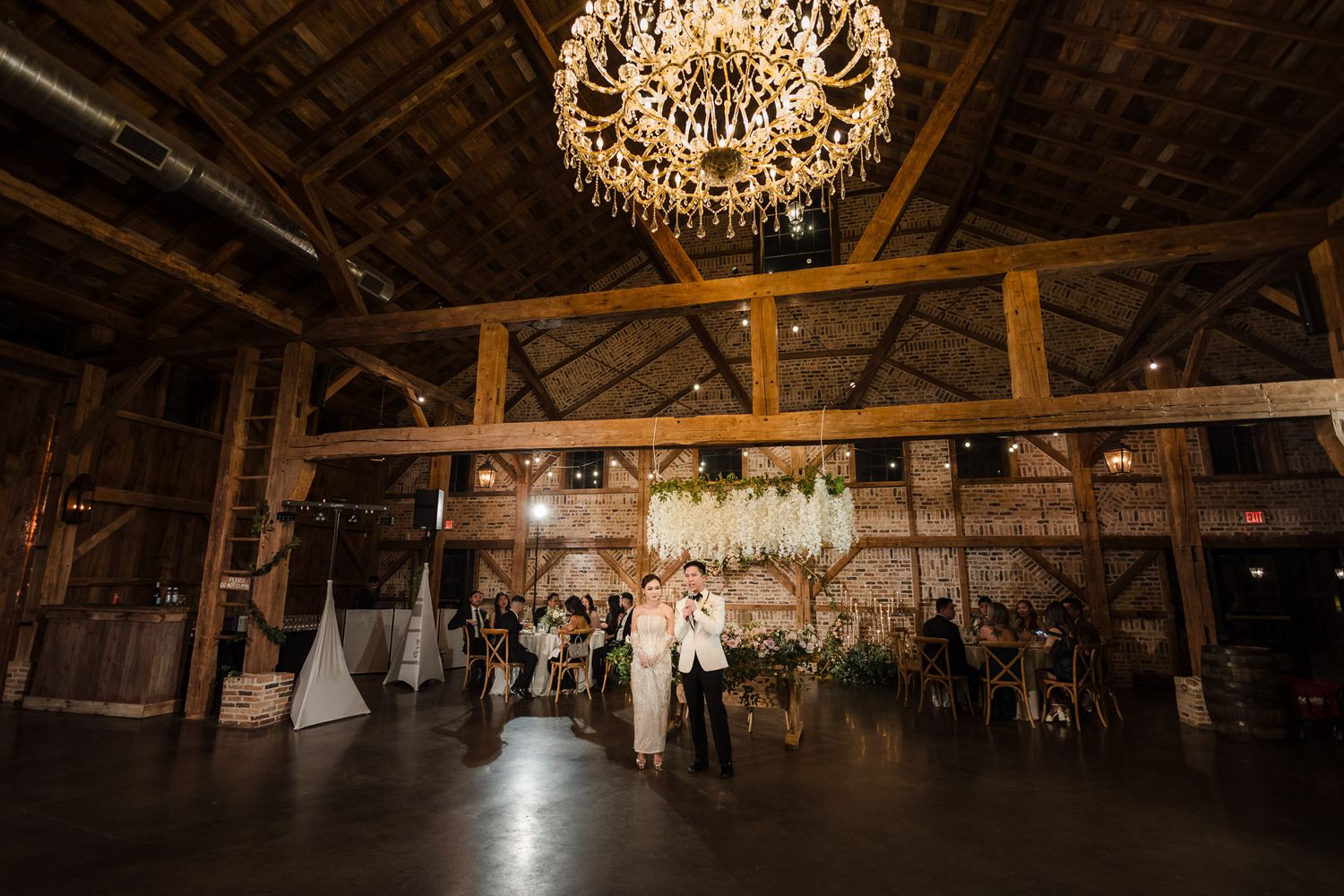
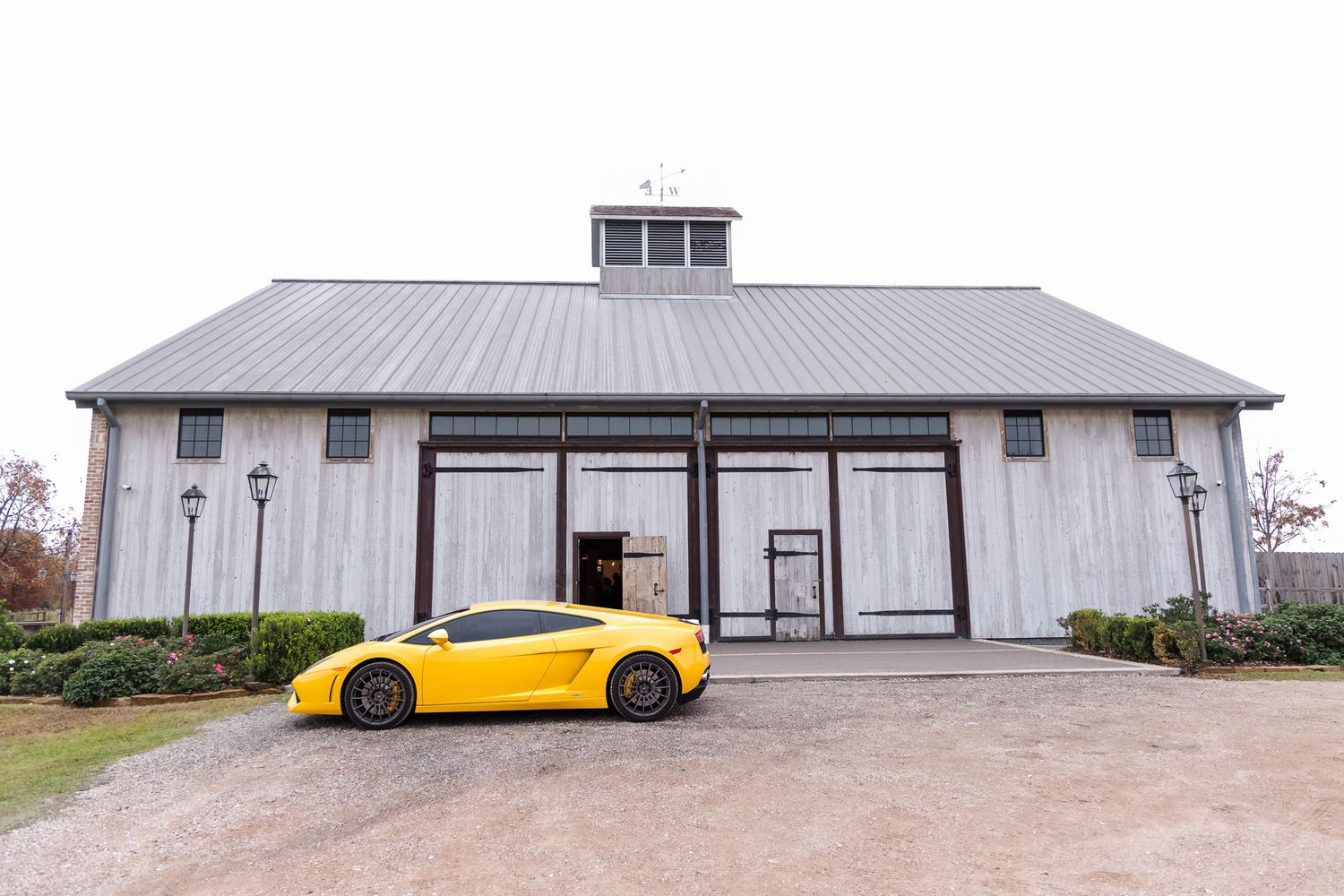
Beckendorff Farms is a 160-year-old barn on the oldest working farm in Katy. Hand-hewn beams, exposed brick, a crystal chandelier the size of a
small car, and open field in every direction.
It is one of the most beautiful venues in the Houston area. It is also, from a lighting standpoint, one of the least forgiving — and for a reason most
couples never think about.
Here is what a wedding day here actually looks like through a camera.
The Barn Problem: Nothing Here Bounces
Start with the thing that shapes every other decision.
Most indoor venues give a photographer at least one surface to work with — a white ceiling, a pale wall, something neutral to bounce a flash off and
turn a hard light source into a soft one.
Beckendorff gives you none. Ceiling: aged timber. Walls: aged timber and brick. Beams, trusses, posts, the second-floor structure — all of it warm
brown wood, and all of it very far away.
Fire a flash at any of it and two things happen. Most of the light never comes back. What does come back is orange.
This is not a flaw in the venue. It is exactly why the room is beautiful. But it means a photographer working here has to bring their own light and
place it deliberately, because the building will not help.
Getting Ready: A Suite With No Window
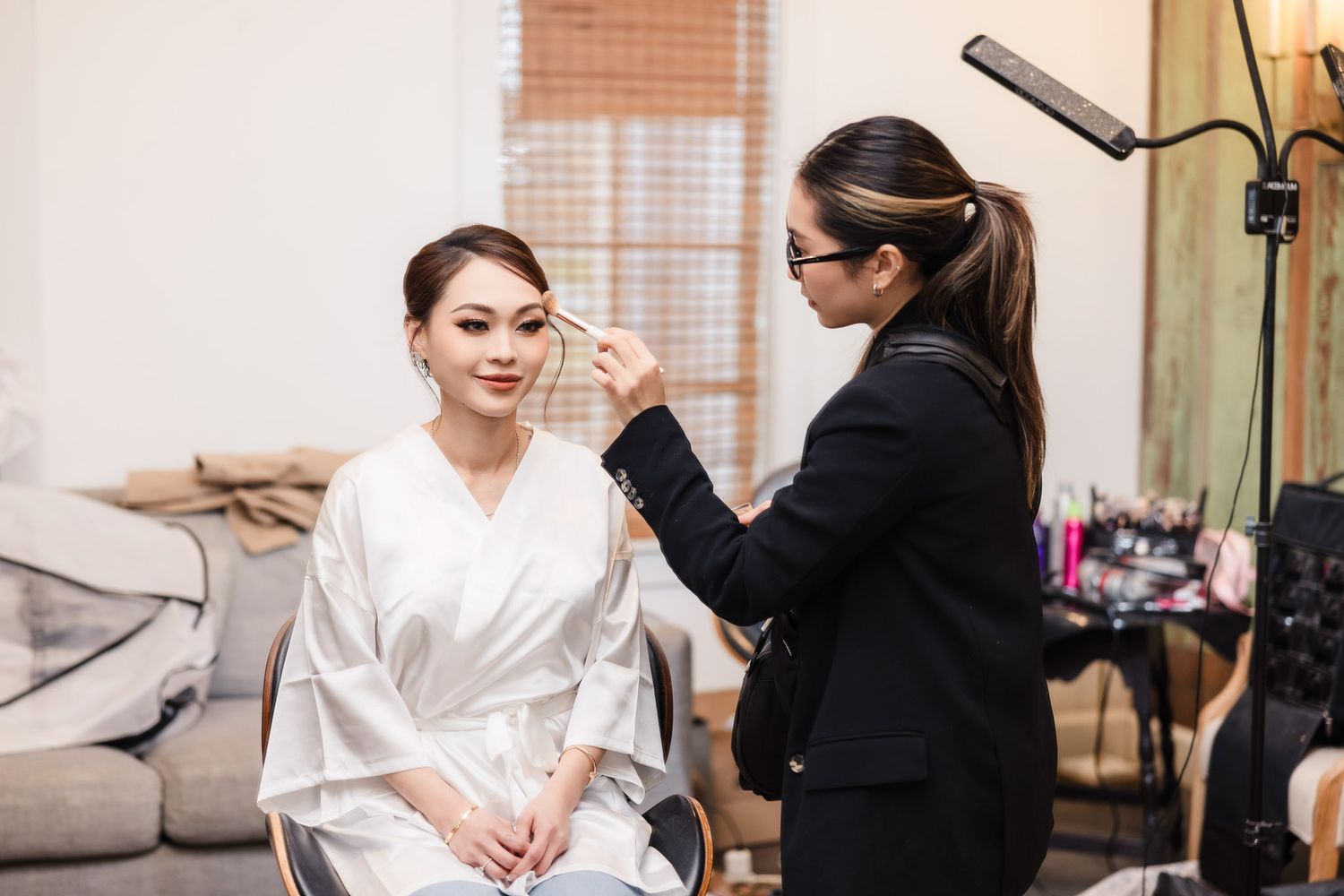
The getting-ready suite is small — roughly a hundred square feet, and it holds hair, makeup, dressing, and everyone who wants to be in the room. It
has no windows.
There is no natural light solution here. Every frame is lit.
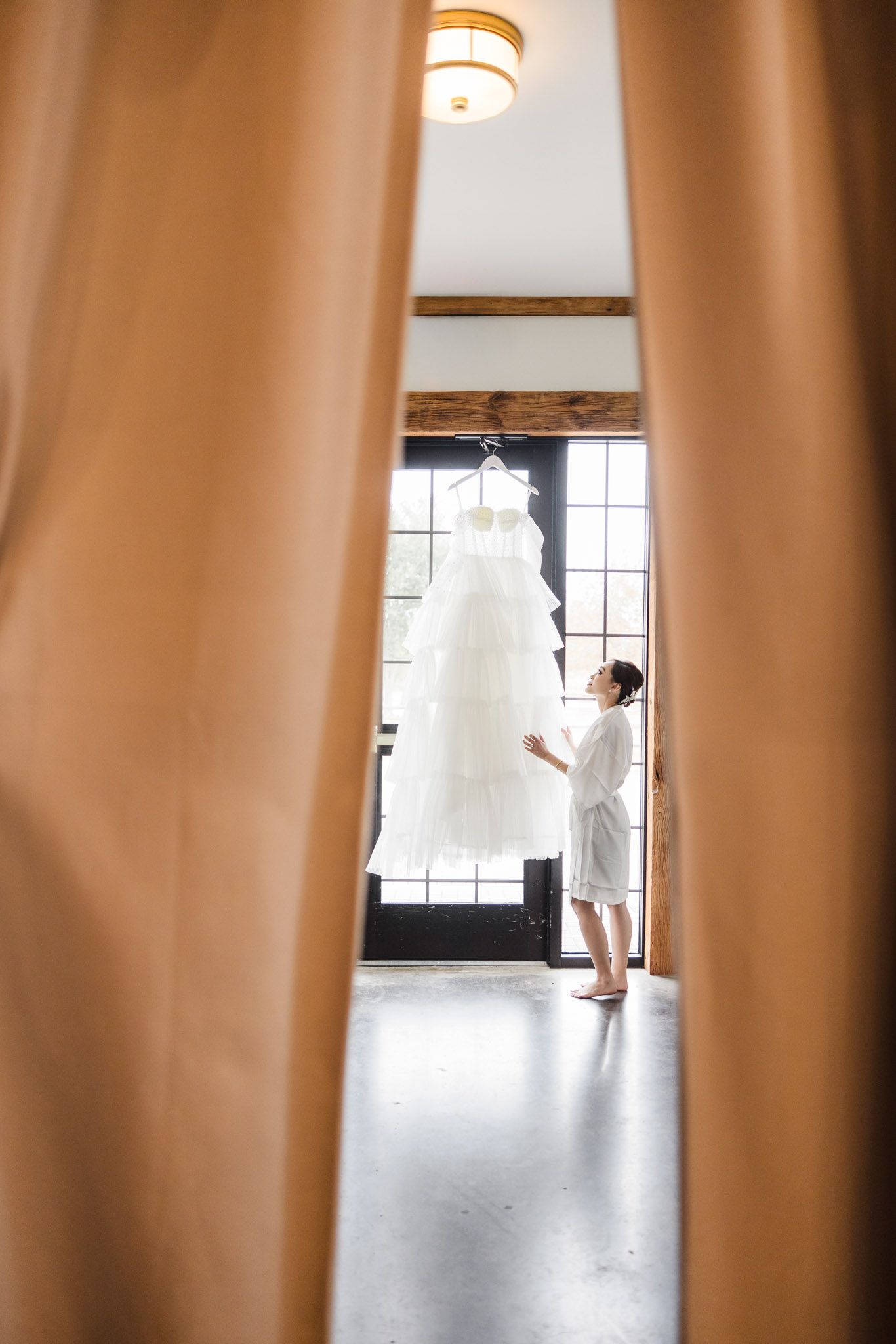
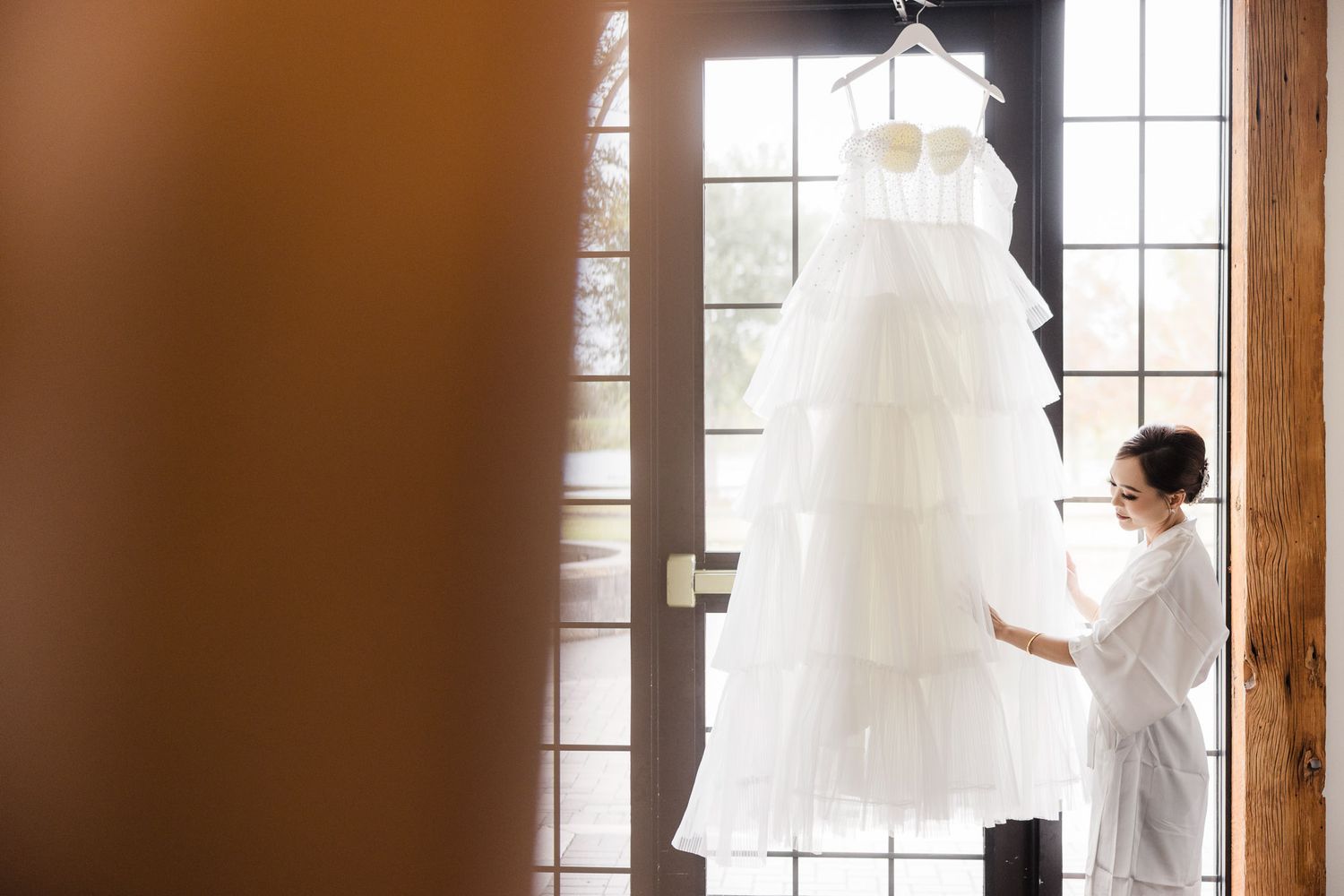
The workaround worth knowing: immediately outside the suite is a hallway with full-height glass doors. That hallway is where the daylight lives.
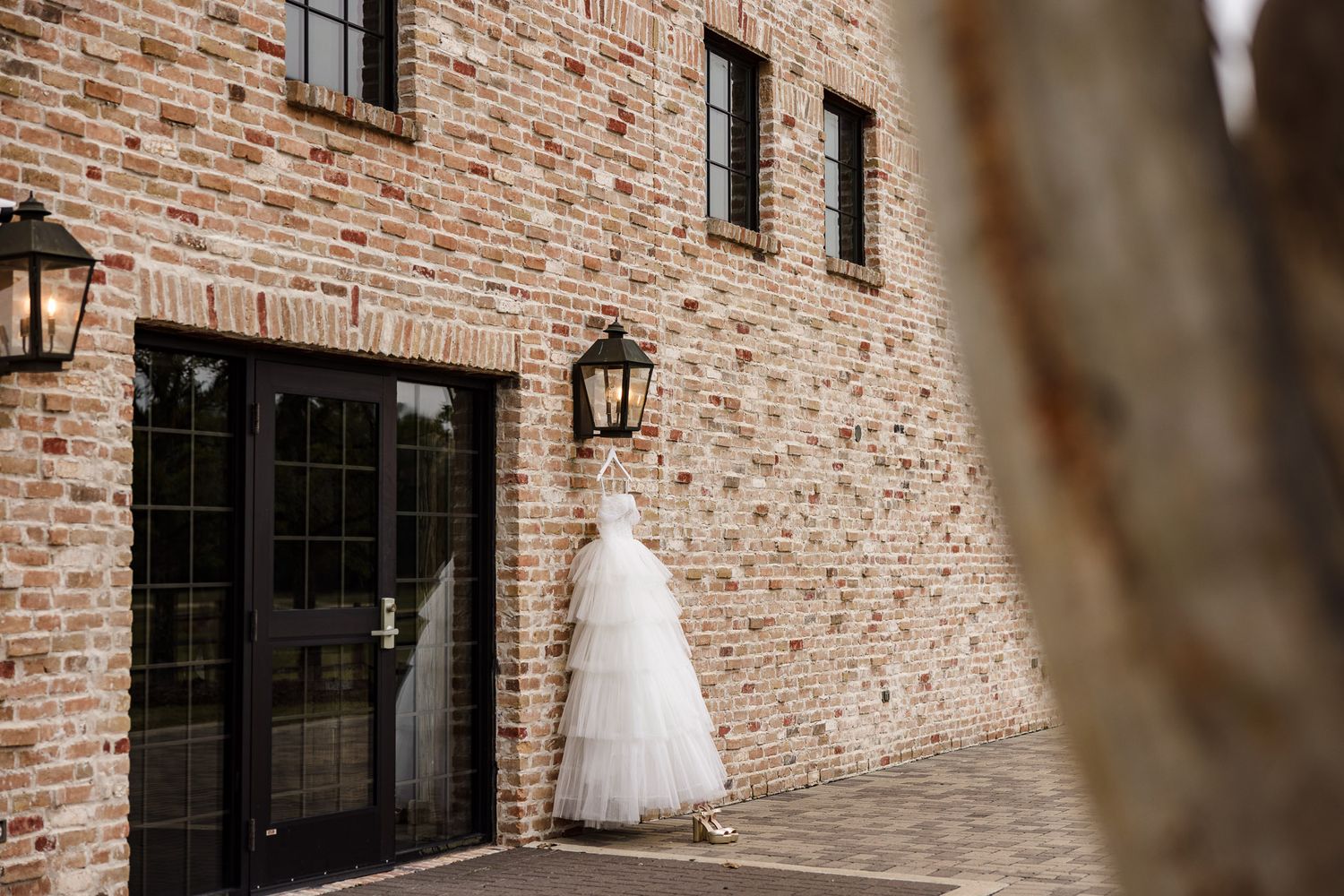
We hang the dress there and shoot the quiet pre-ceremony moments in that doorway instead of fighting a windowless box.
If you are planning your morning here, build in ten minutes for that hallway. It is the only daylight you get indoors all day.
First Look at 4 PM — The Call That Saved the Portraits
Our wedding here was in February. Ceremony at 5:15, indoors.
Blue hour that day was around 5:30.
Read those two lines again. The best outdoor light of the entire day happened while every single person was sitting inside a barn.
That is the trap at this venue in winter, and almost nobody sees it coming. You book a beautiful property with open fields, oak trees, an old rust-
roofed outbuilding — and then your ceremony time puts you indoors for the twenty minutes when all of it looks best.
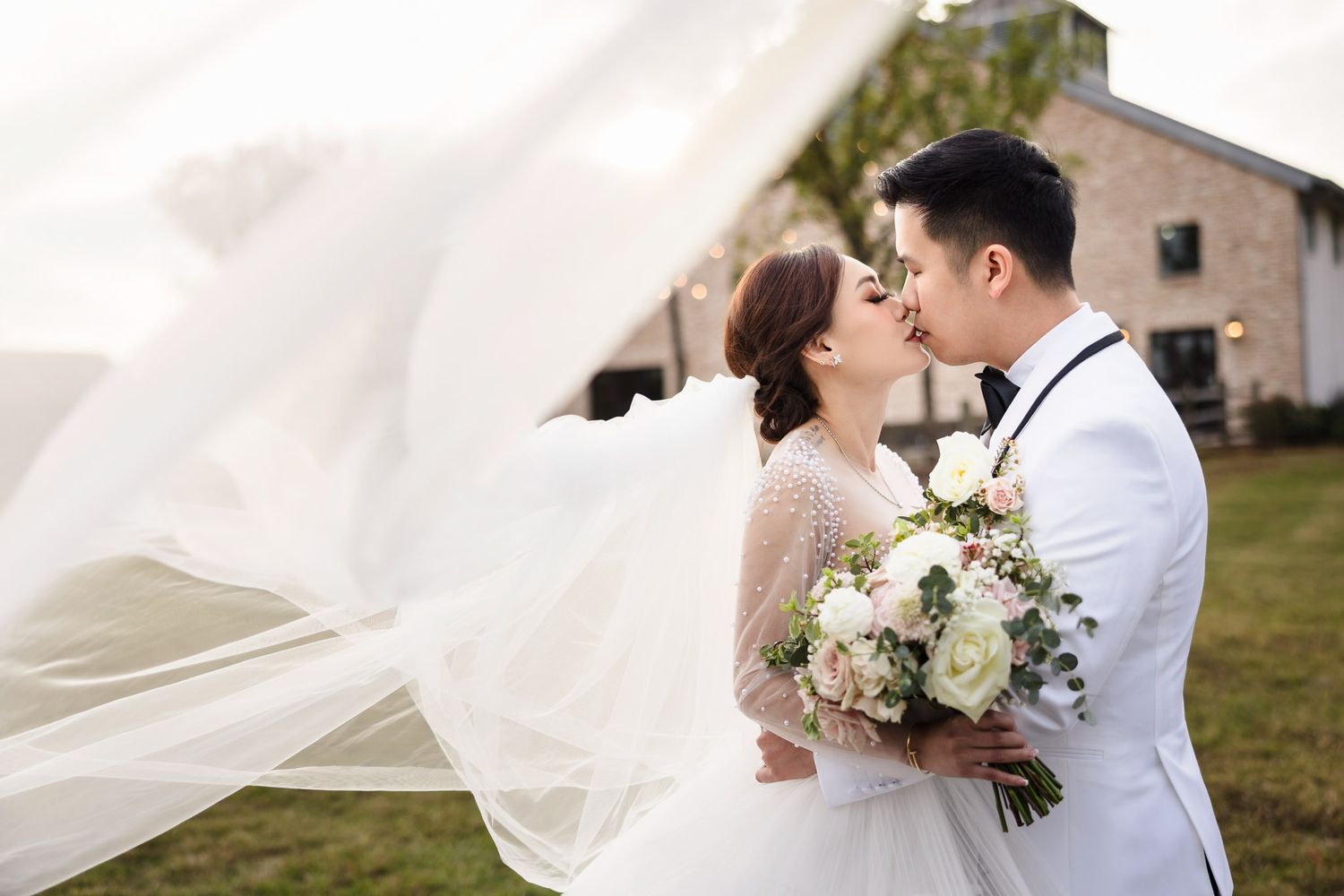
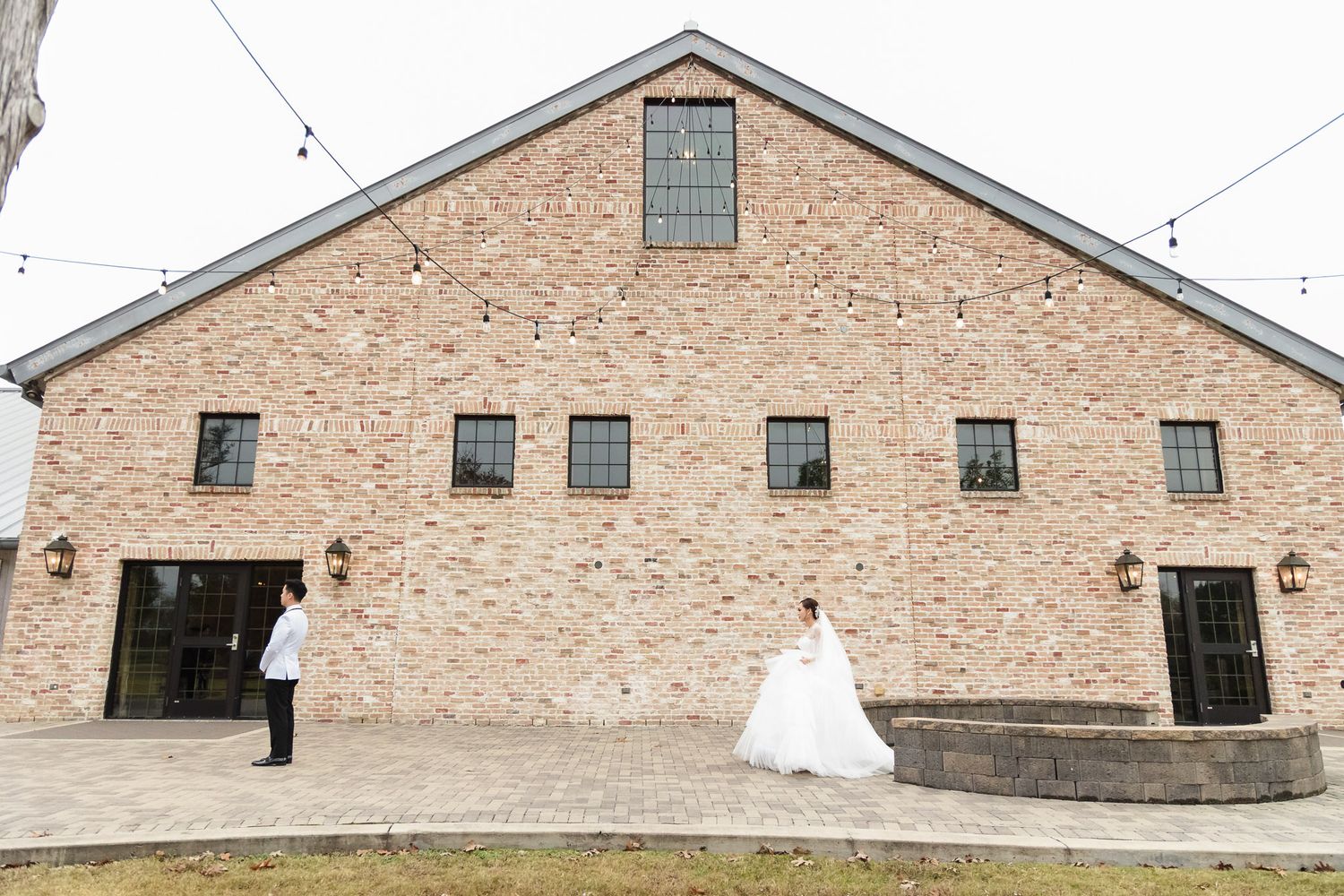
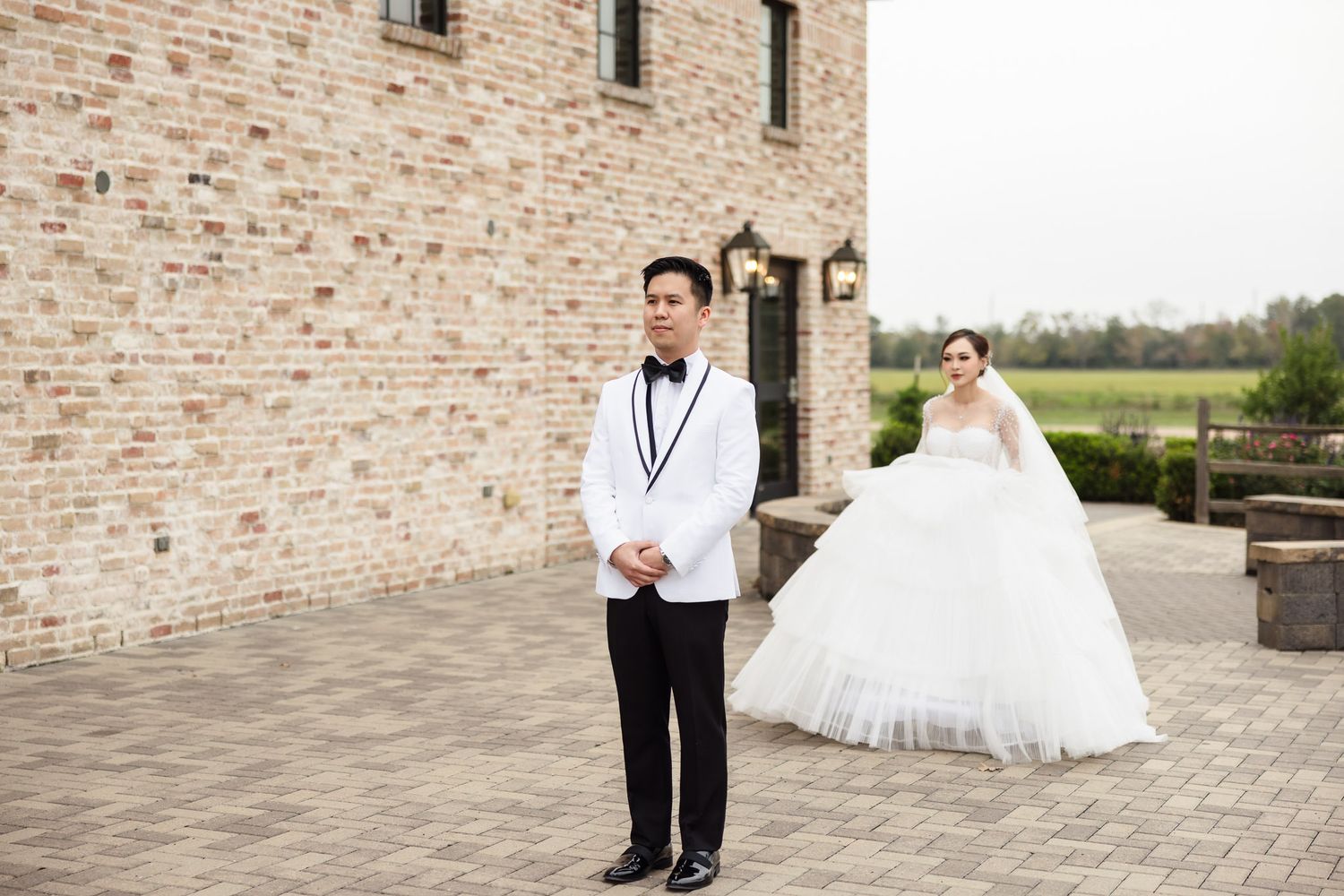
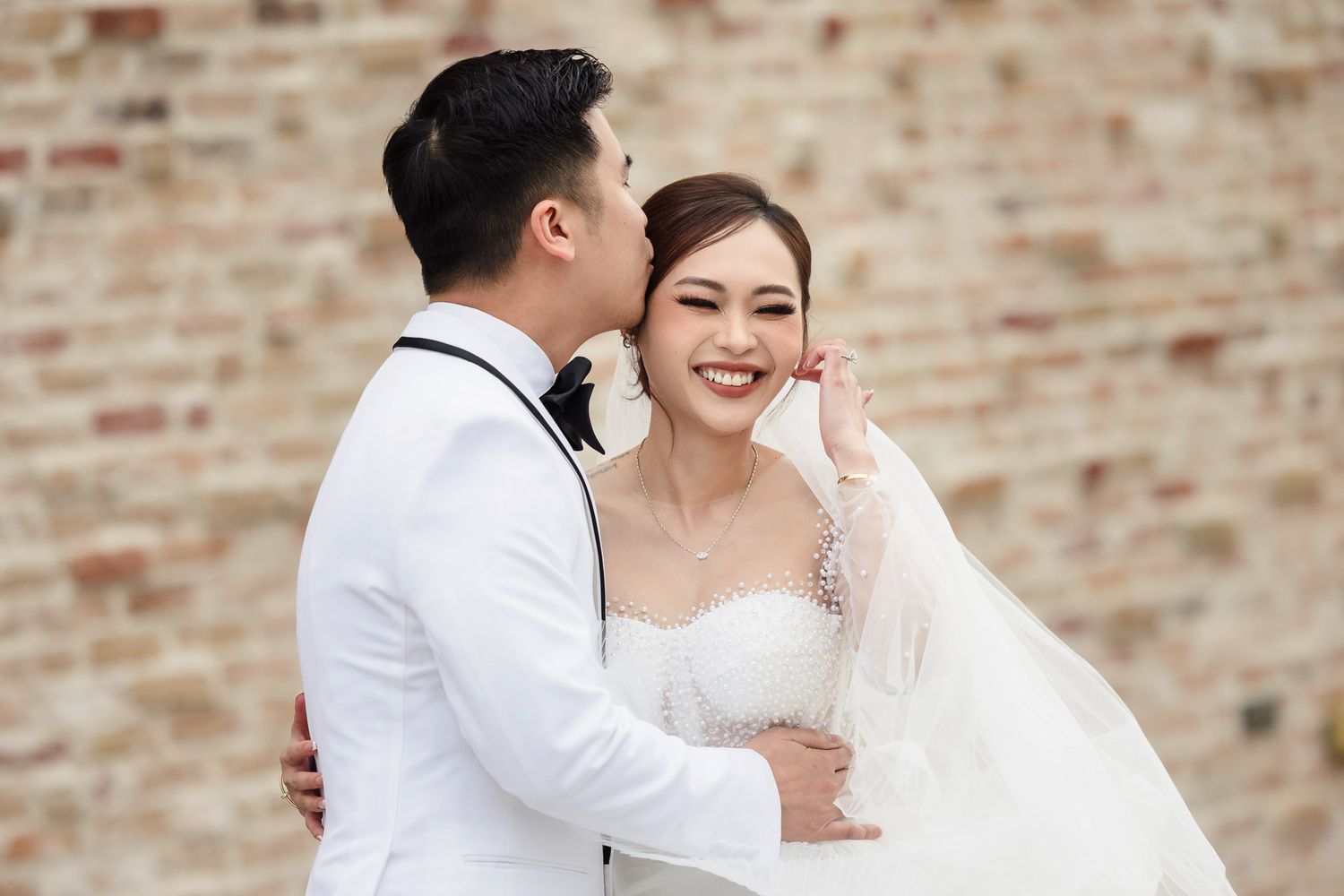
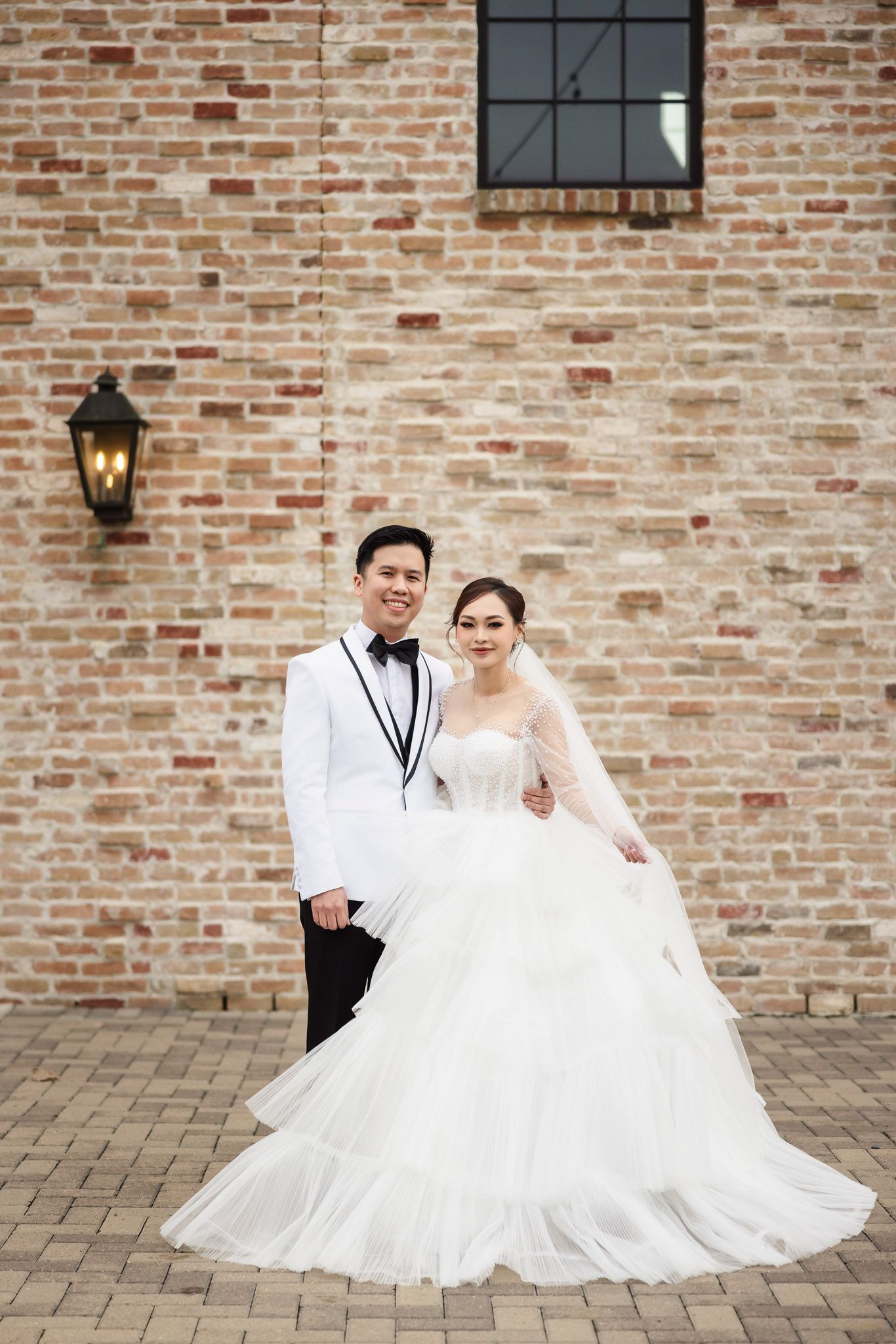
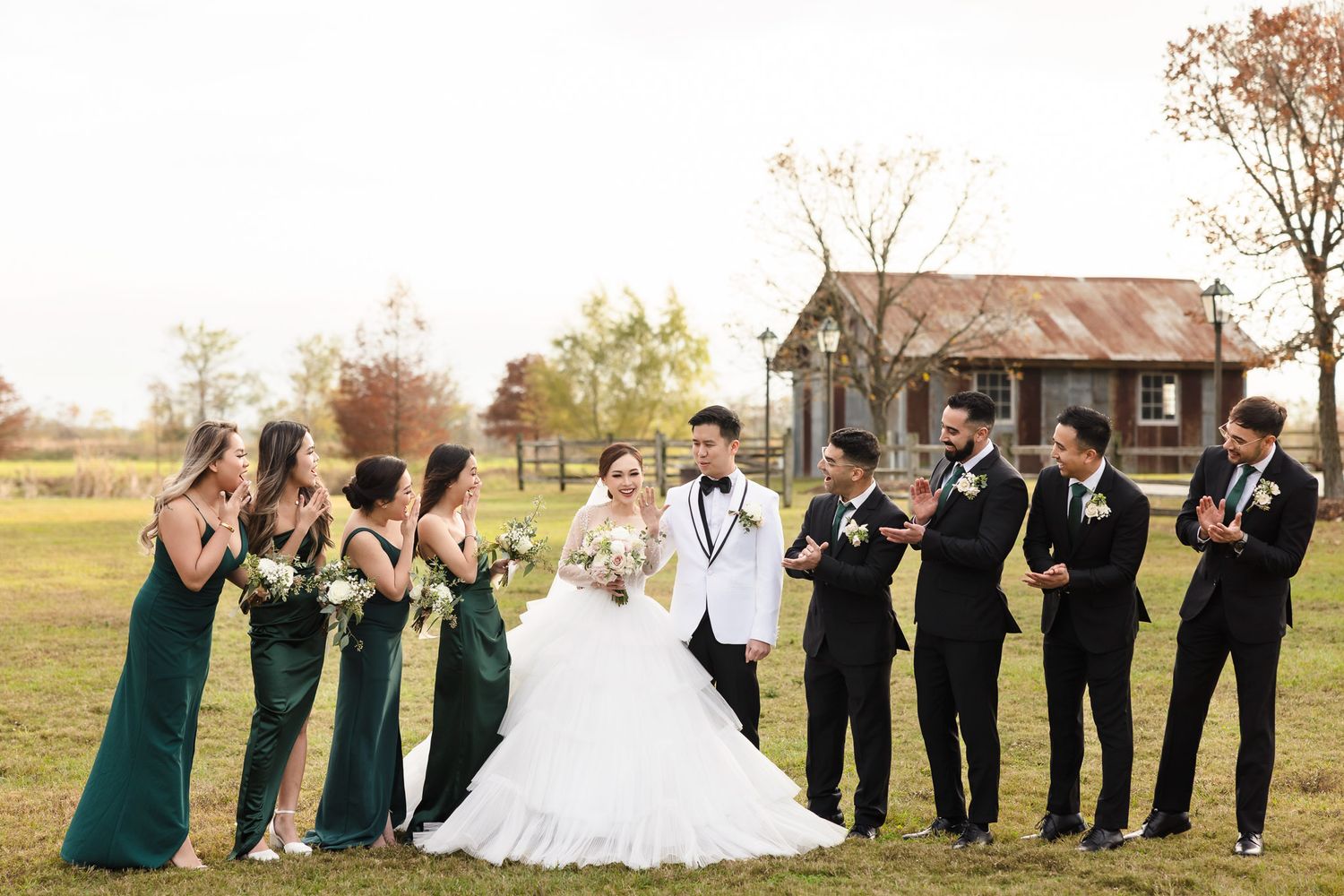
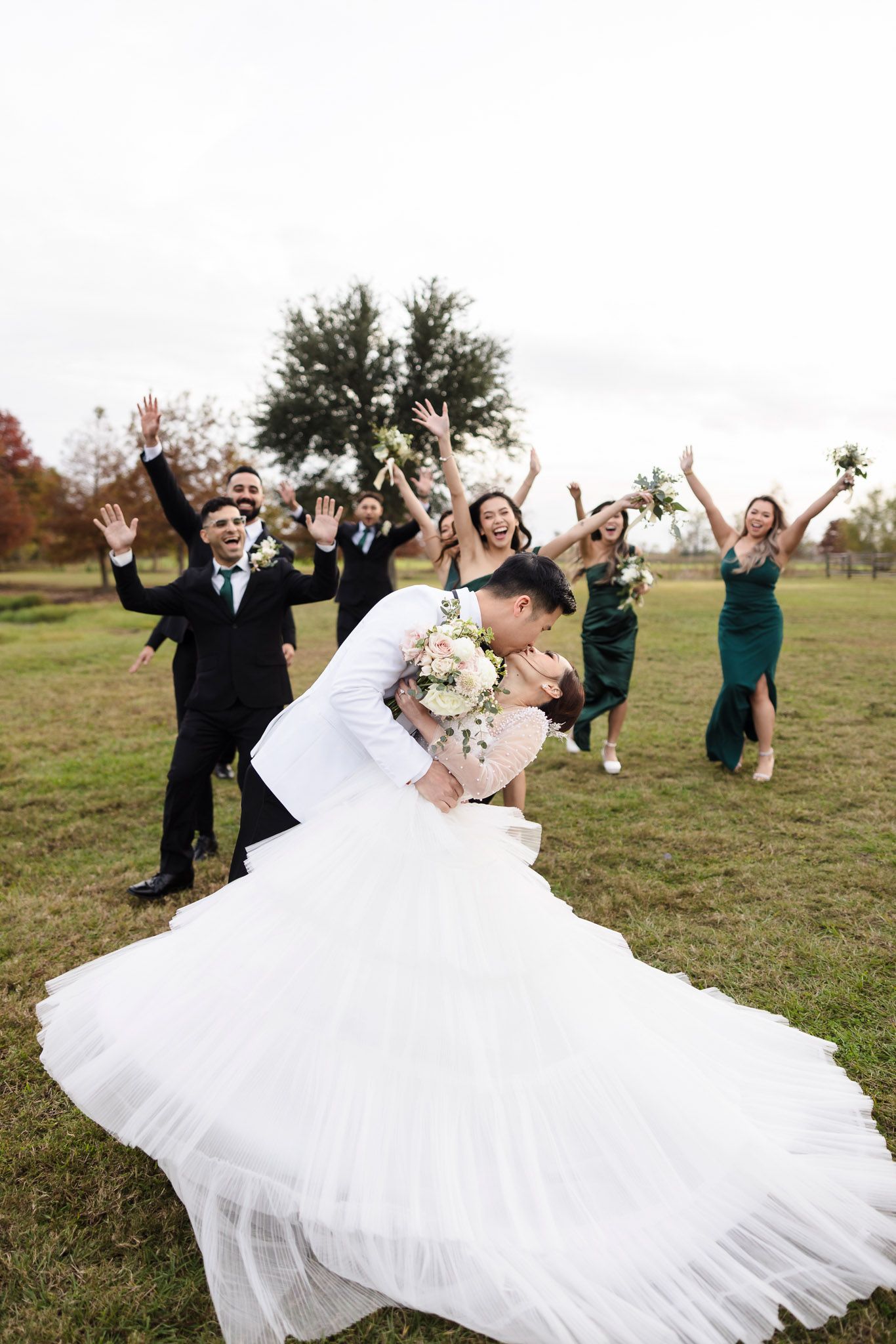
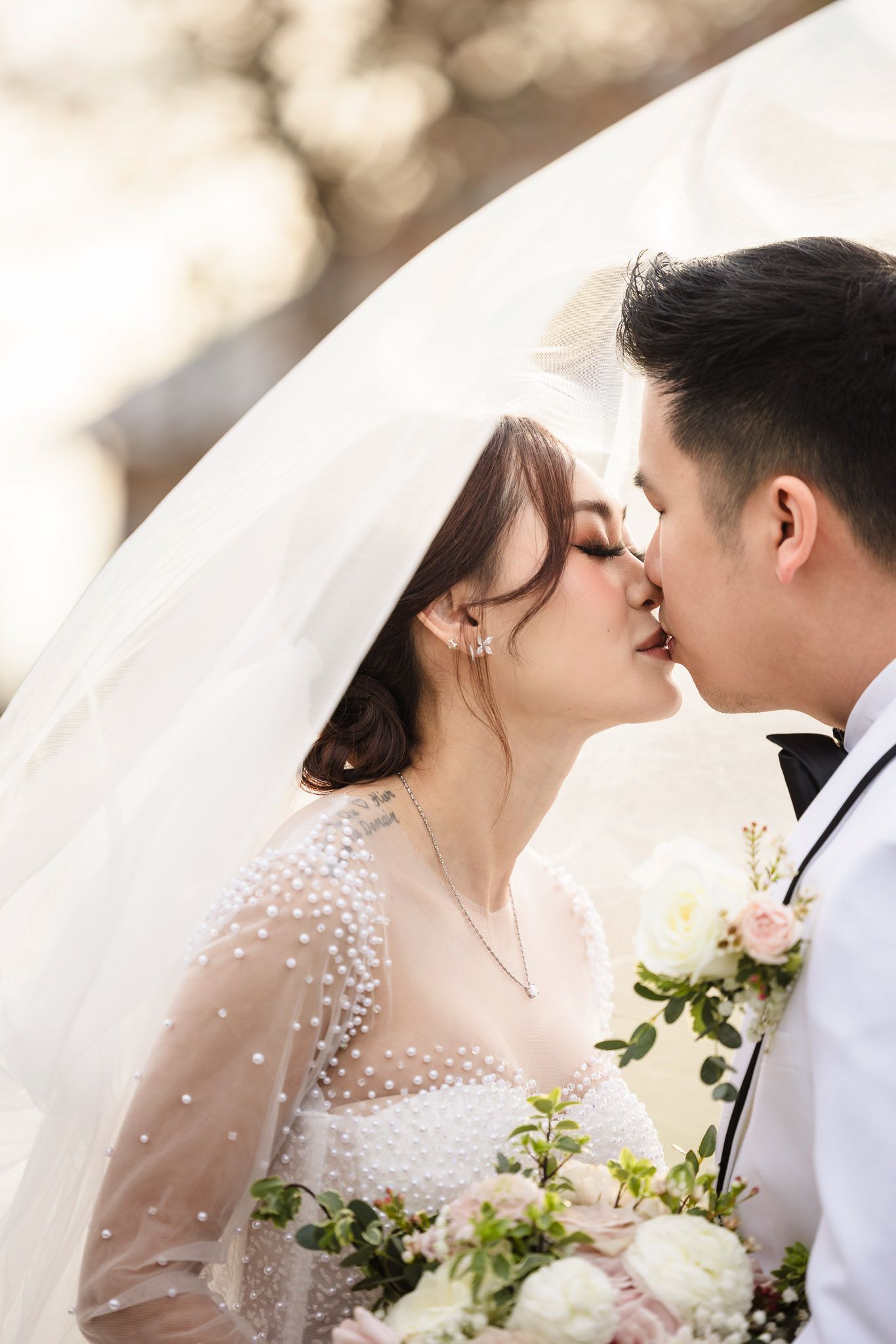
What we did: first look at 4:00, wedding party portraits right after. Every outdoor frame from that day — the couple in the field, the wedding party
against the old barn, the veil shots — came from that window. Entirely natural light.
Had we waited until after the ceremony, all of it would have been shot in the dark.
If your ceremony here is at 5 PM or later between November and February, do a first look. It is not a style preference at this venue. It is the difference
between having outdoor portraits and not having them.
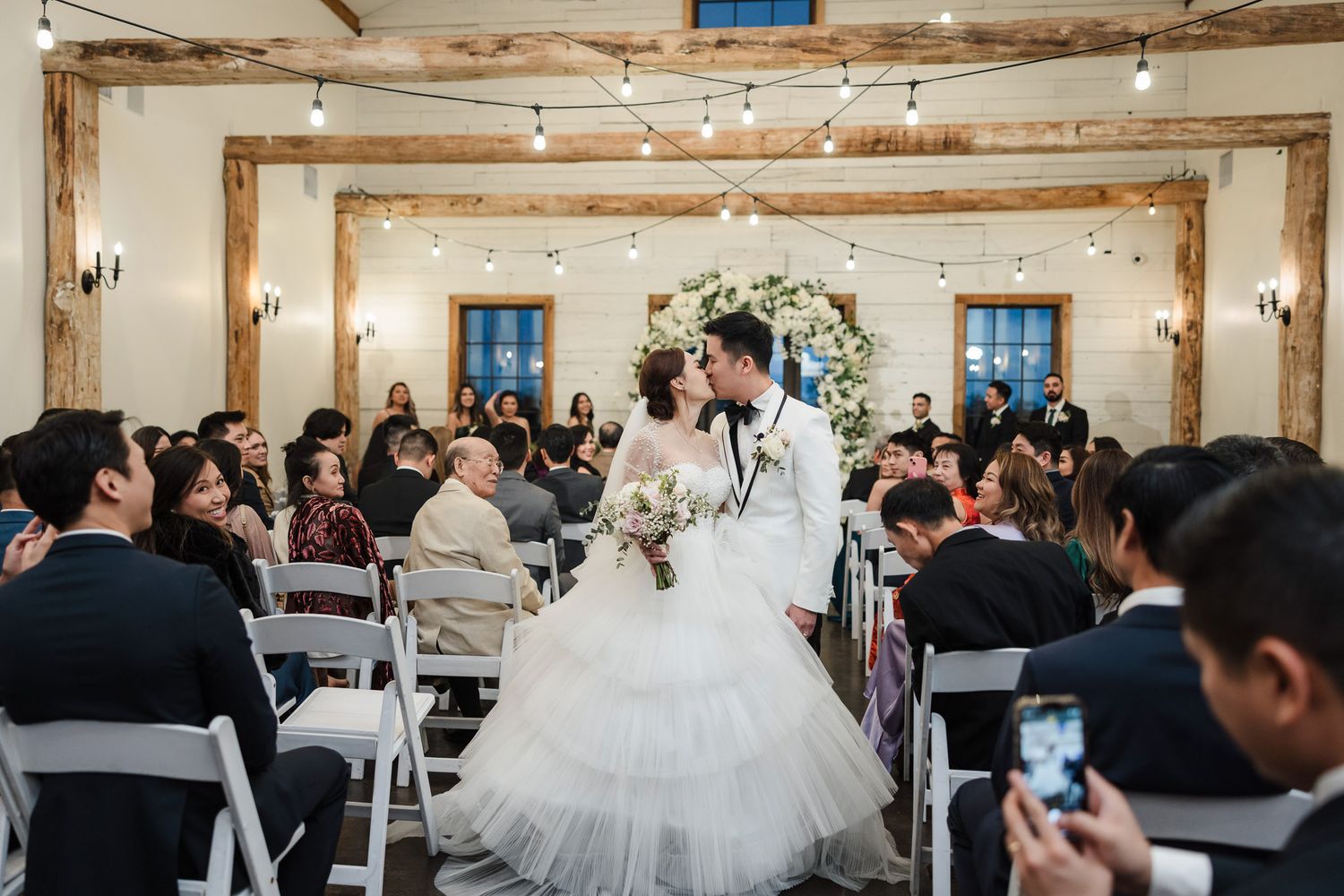
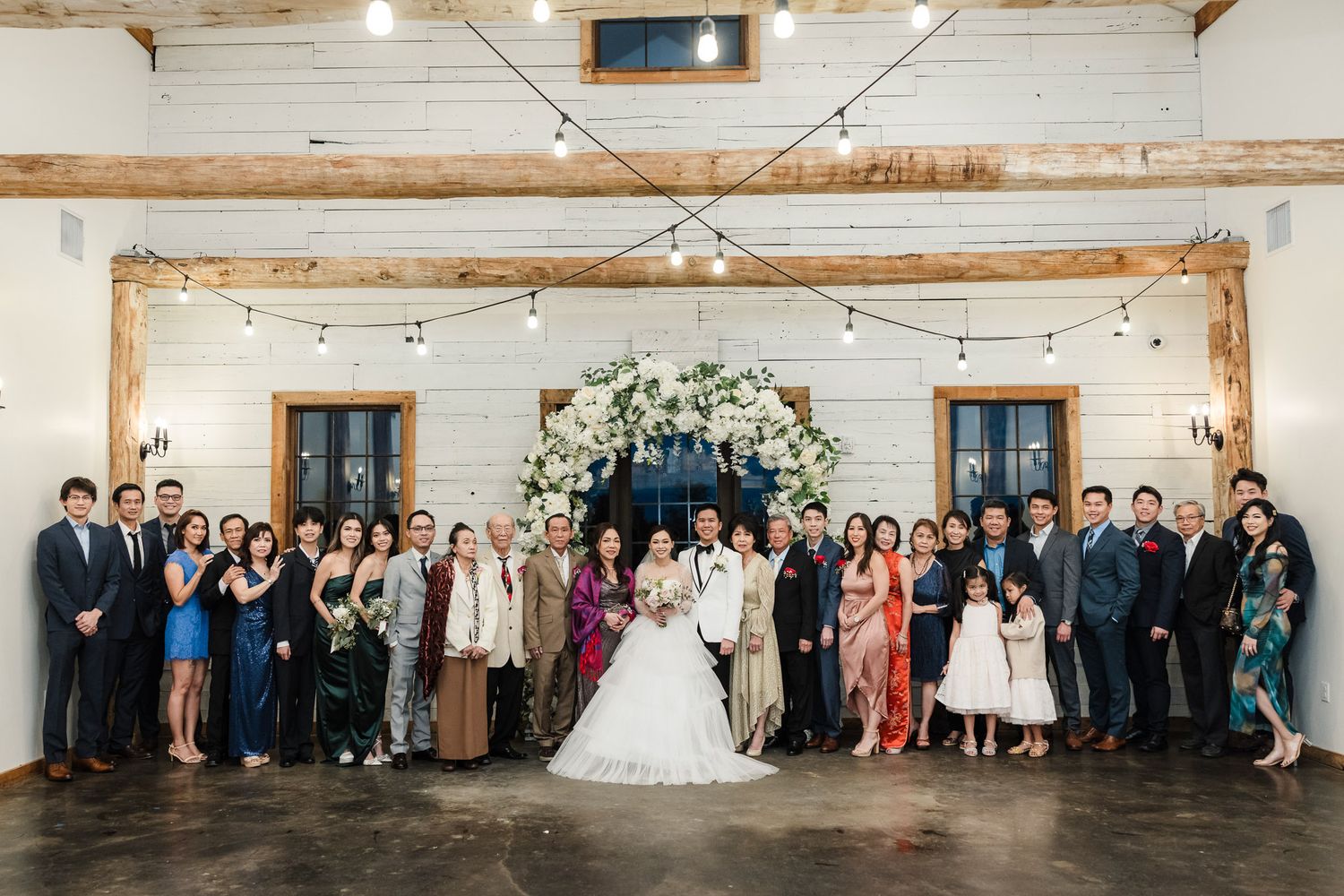
The Ceremony: Indoors, Under String Lights
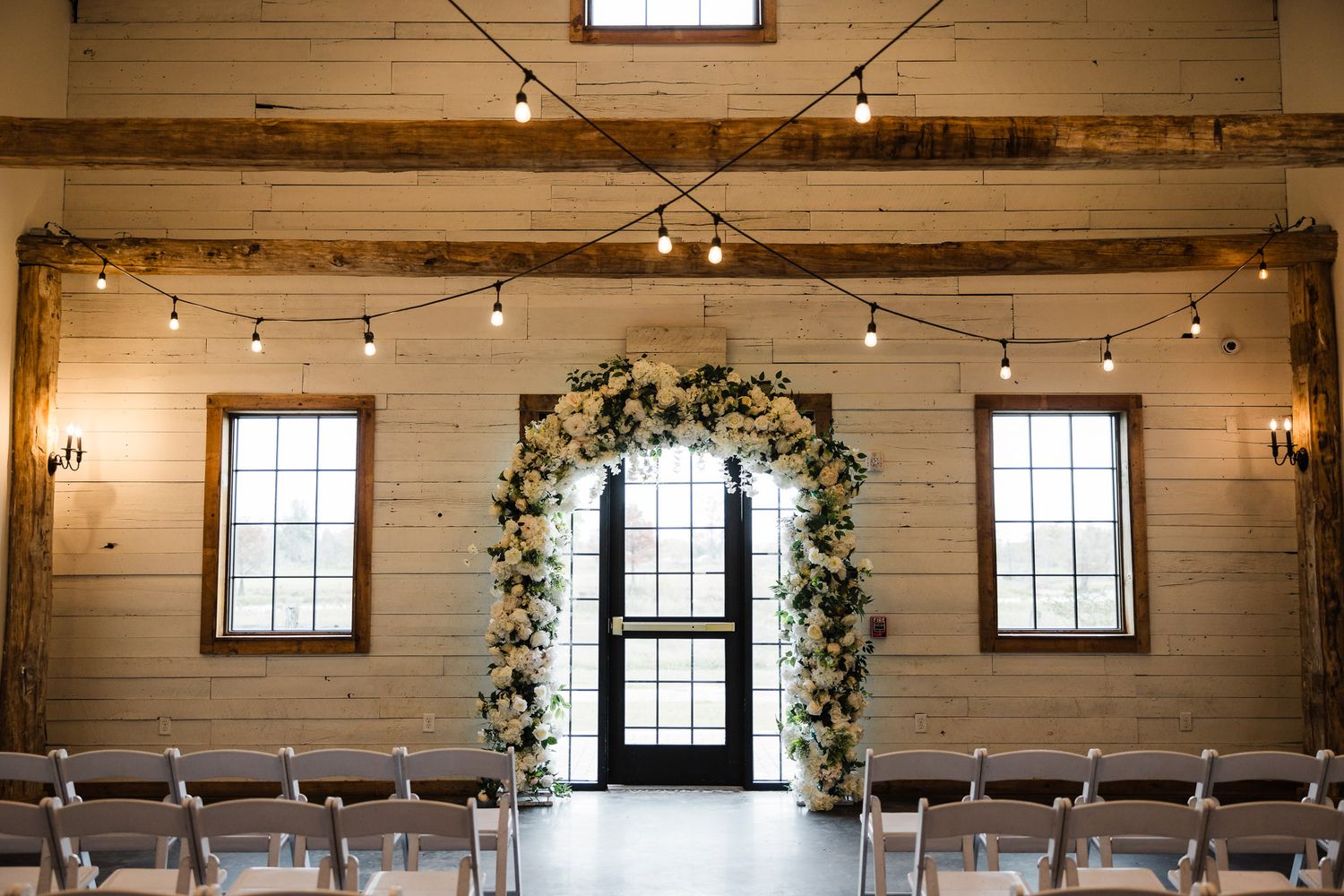
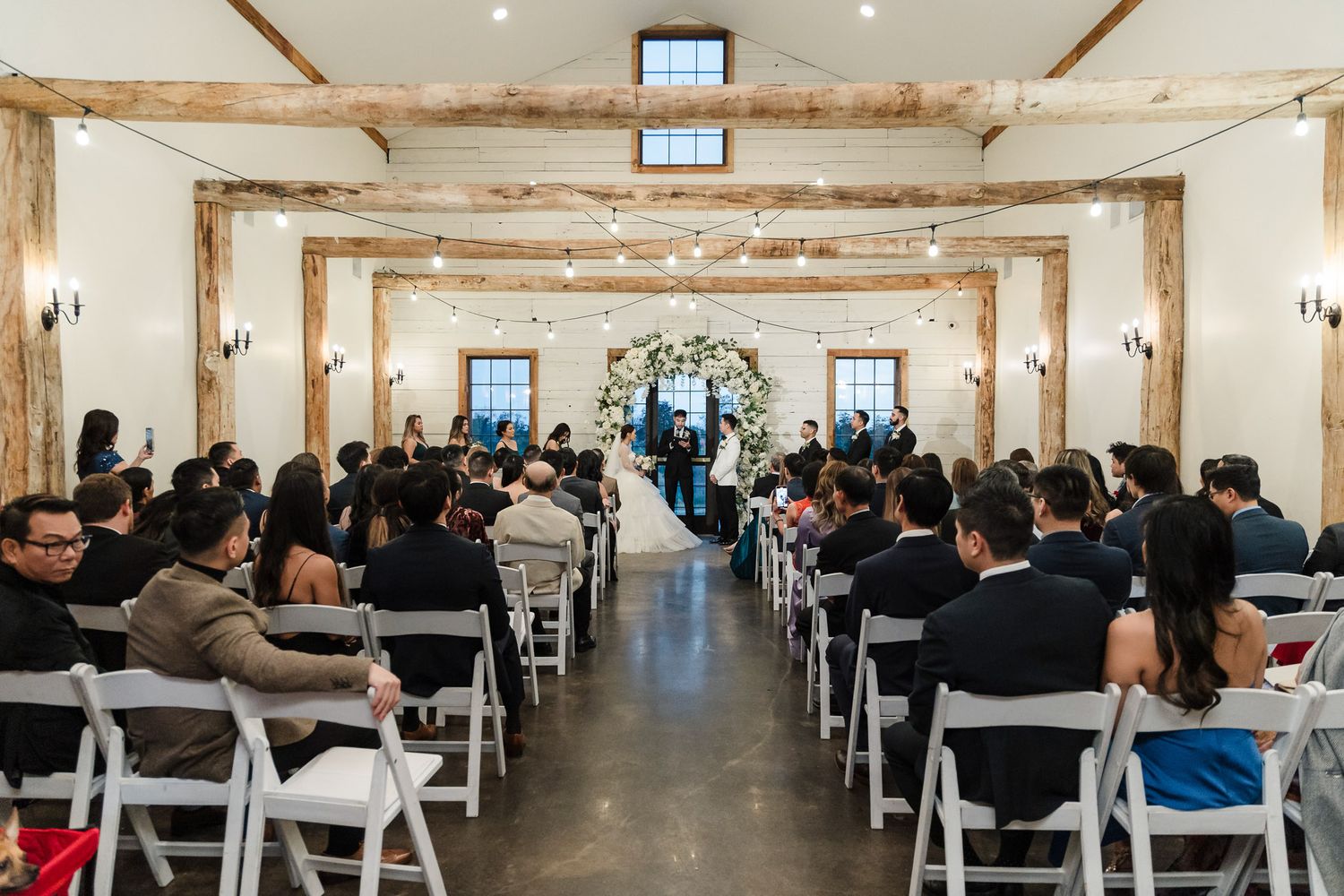
The ceremony room is a different space from the reception barn — white shiplap walls, lighter hand-hewn beams, black-framed windows, and string
lights strung in crossing lines overhead.
To the eye it is warm and lovely. To a camera it is a wall of yellow.
Those string lights are the dominant source in the room, and they are very warm. Left uncorrected, everything goes amber — skin, the dress, the
white walls, the florals.
How we shoot it: three lights, all gelled to sit inside the room’s own colour rather than fight it. Two stands placed on either side of the room, firing
forward from low, plus flash on camera gelled to match.
The placement matters, and it is different from what we do at the reception. A ceremony needs even coverage — guests fill every chair, the couple is
at the front, and there can be no dead zone where someone’s face disappears. Lights on either side firing forward fill the room flatly and reach the
back rows. At the reception a few hours later we use the opposite approach, because a dance floor needs direction and depth rather than evenness.
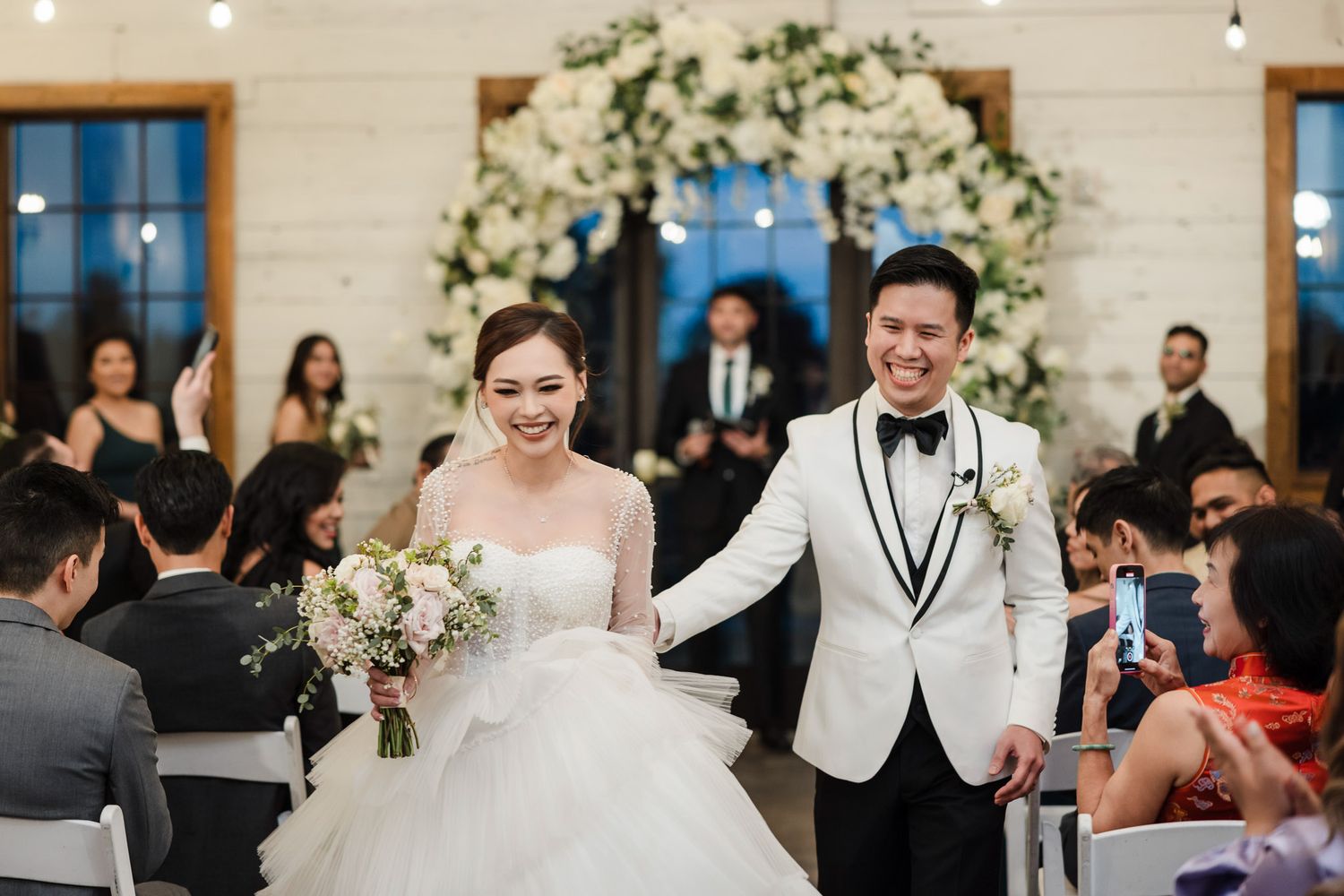
Our settings through the ceremony ran around ISO 1250, f/2.8, 1/160 with flash filling on top. The result: string lights stay golden, and nobody in
the room turns orange.
Two Dogs and a Wagon
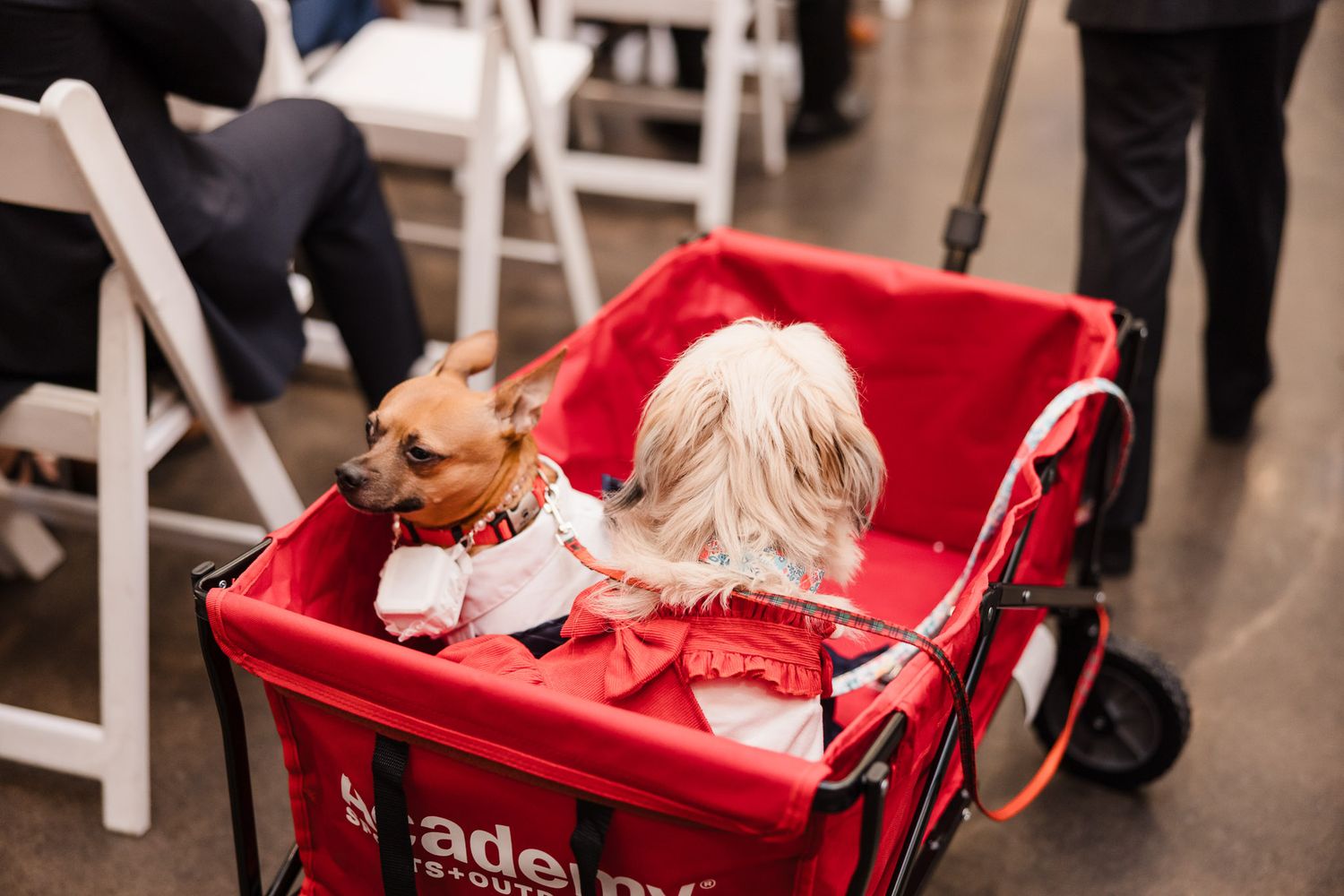
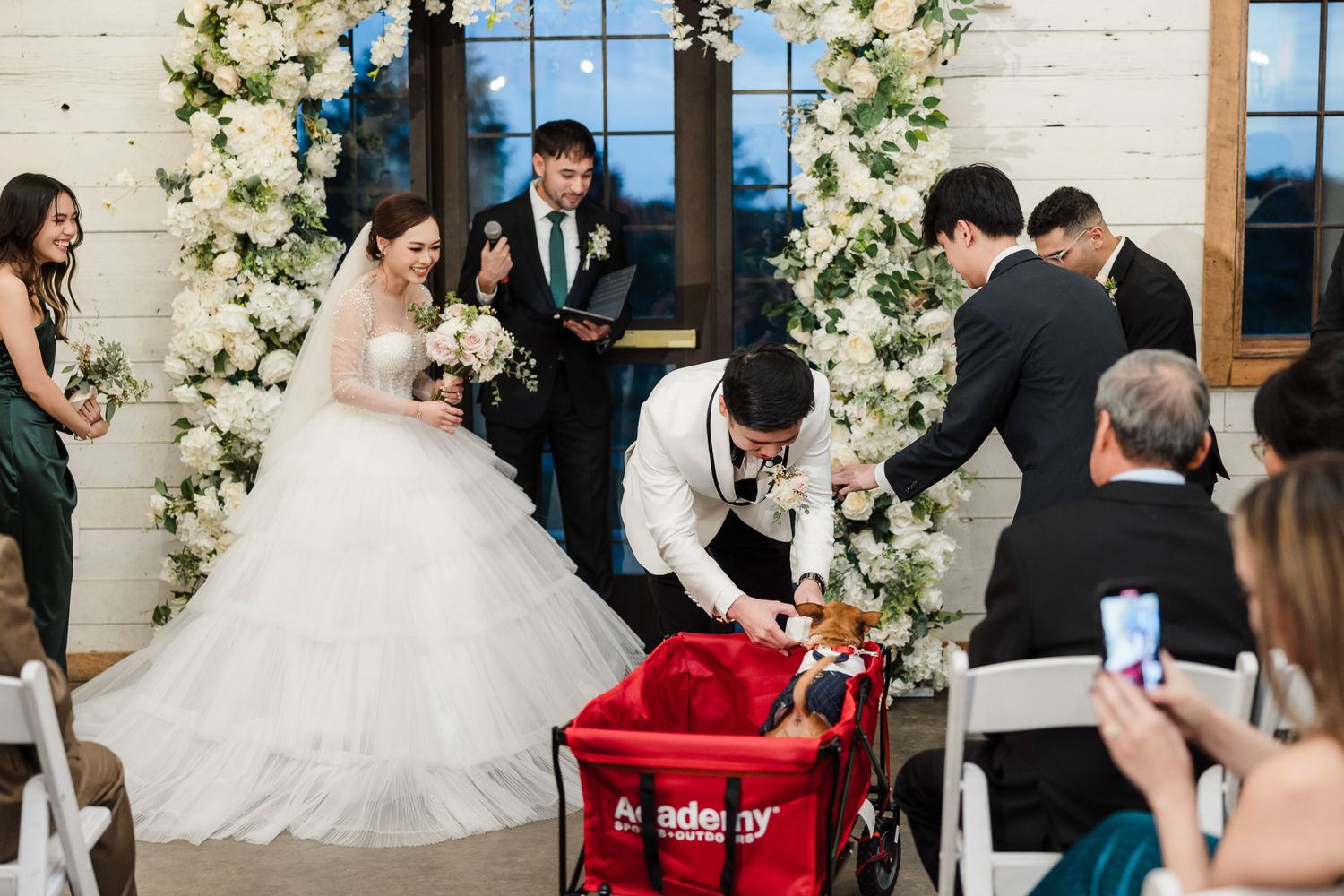
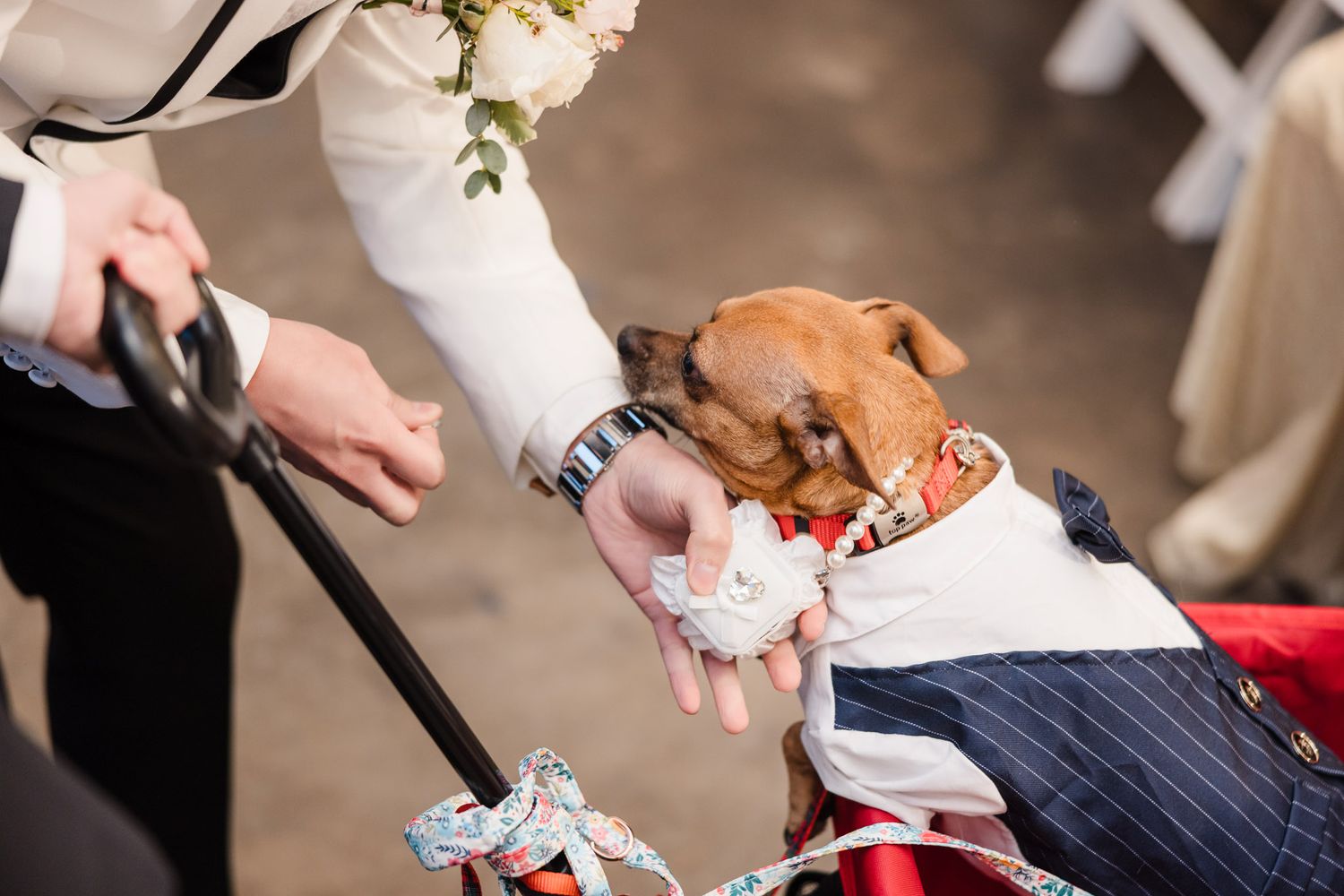
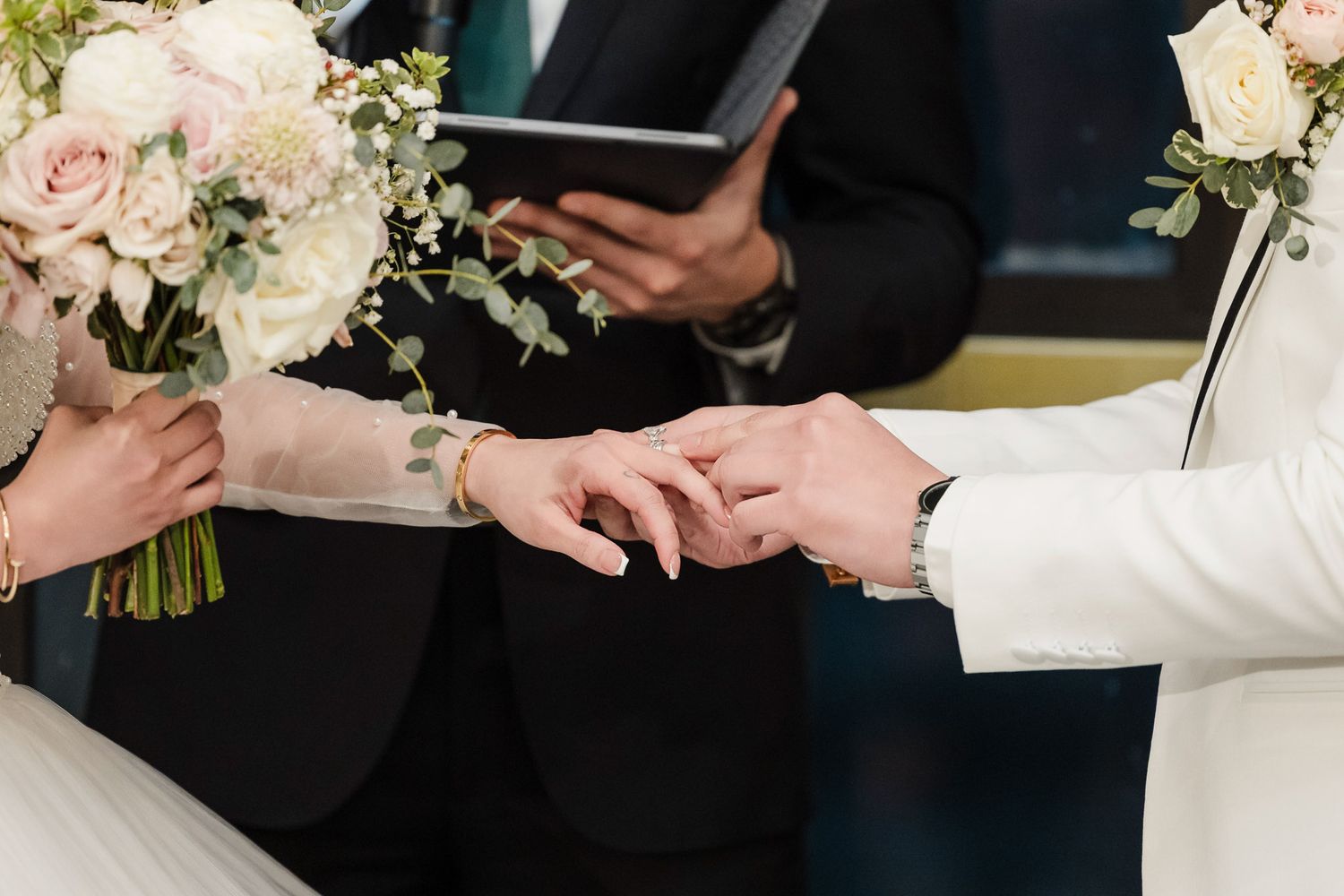
The rings came down the aisle in a red wagon, carried by two dogs — one in a red dress, one in a navy pinstripe suit with the ring box in his collar.
We knew it was happening. That matters more than it sounds, because a dog in a wagon does not hit its mark, does not wait, and does not do a
second take. You are either low, close, and pre-focused when it comes past, or you have a photo of a wagon.
The Reception: Three Lights, All Gelled
Reception at 7:00. This is the historic barn — the one everyone books this venue for.
Very high vaulted ceiling, hand-hewn trusses, exposed brick infill, and one enormous gold crystal chandelier. Plus string lights and lanterns. Every source in the room is warm, and there is nothing to bounce off in any direction.
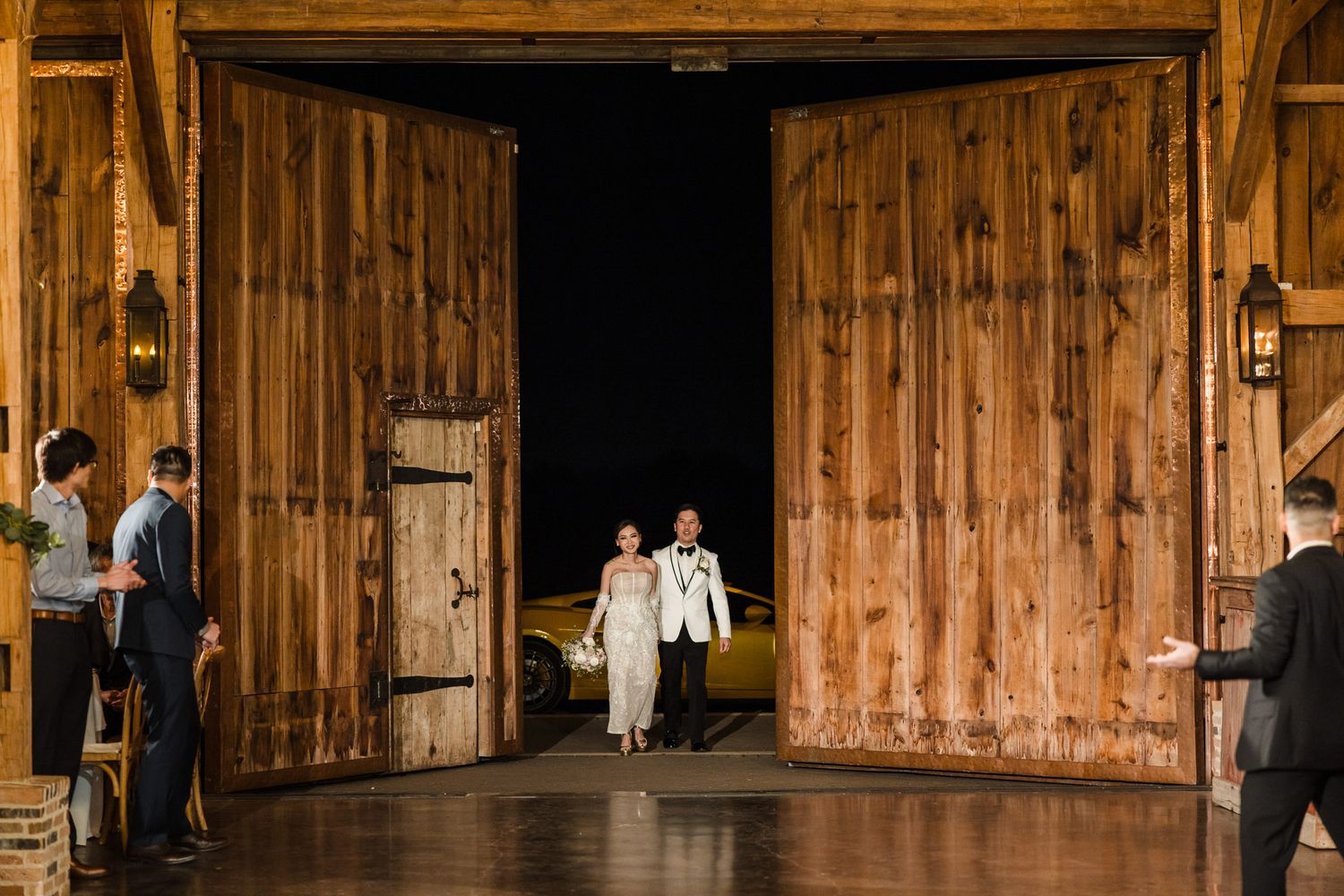
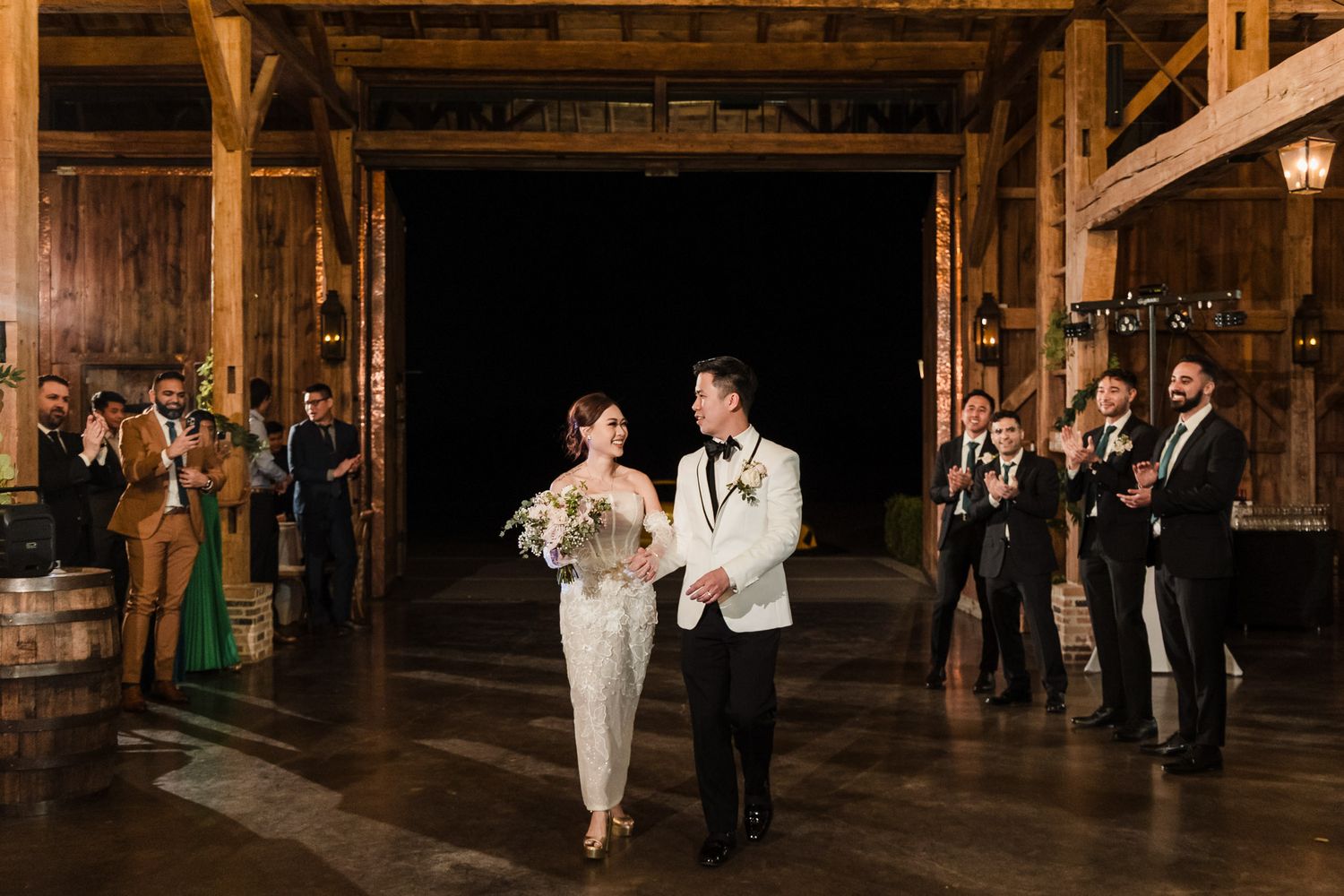
The grand entrance comes first, and it is the hardest frame of the night.
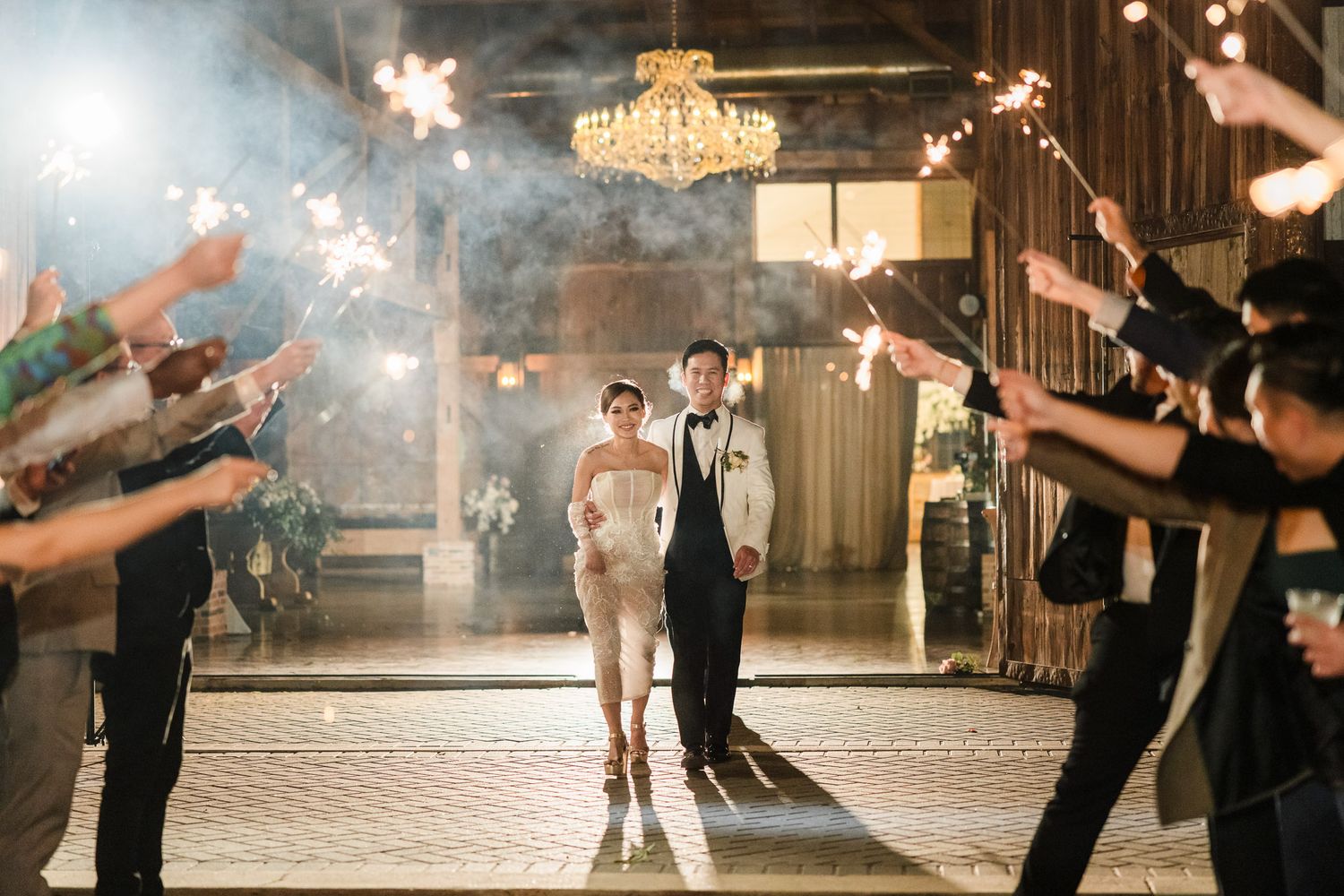
The couple enters through the barn’s main doors — two enormous timber doors thrown open onto a completely black field. Inside, warm lit wood.
Outside, nothing. And the couple walks out of that nothing.
That is an extreme range to hold in one frame. Expose for the lit interior and they are two silhouettes in a dark rectangle. Expose for them and the barn behind you blows out. It happens once, they do not stop walking, and there is no second take.
The lights have to already be placed and metered before the doors open. Not adjusted as it happens — before.
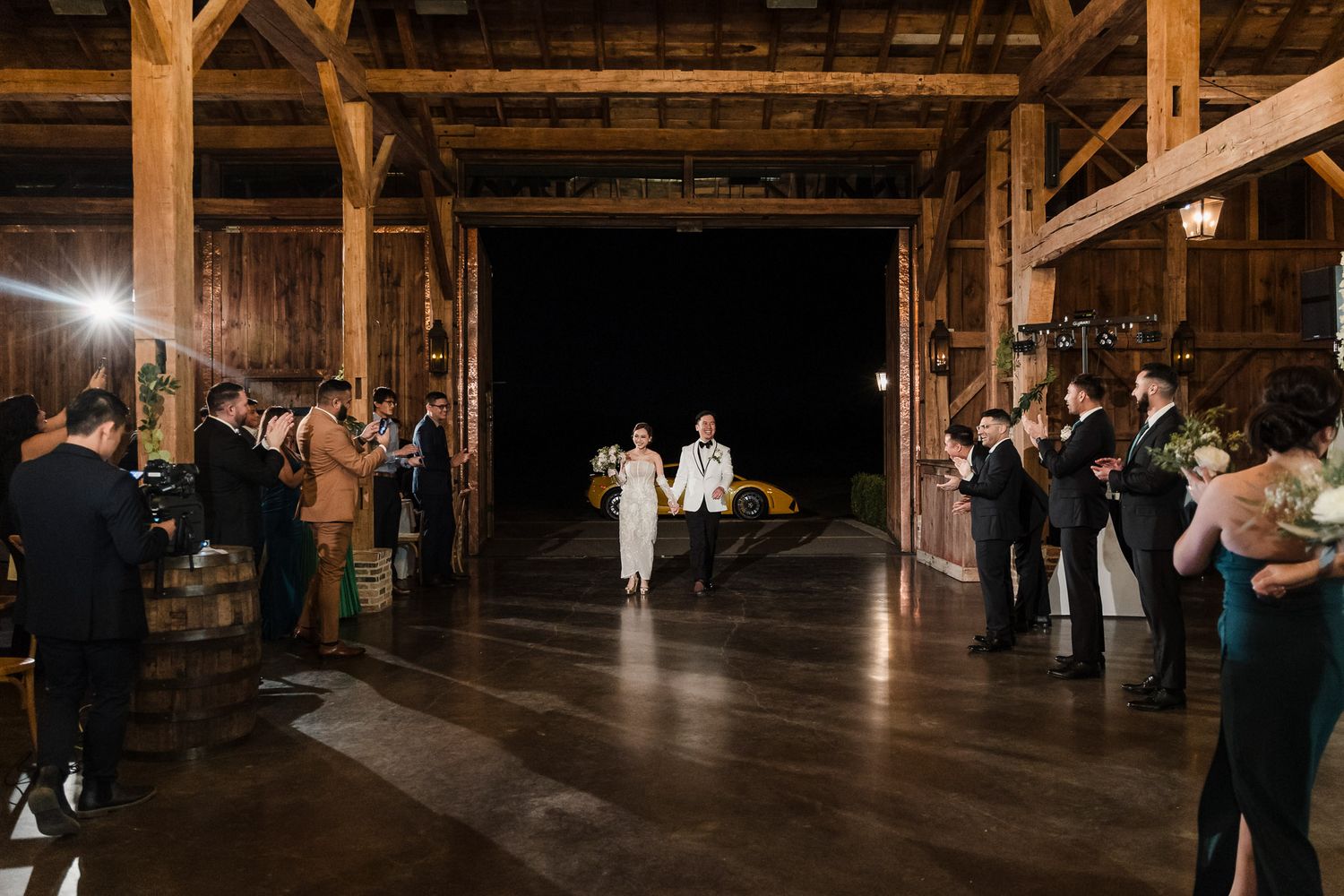
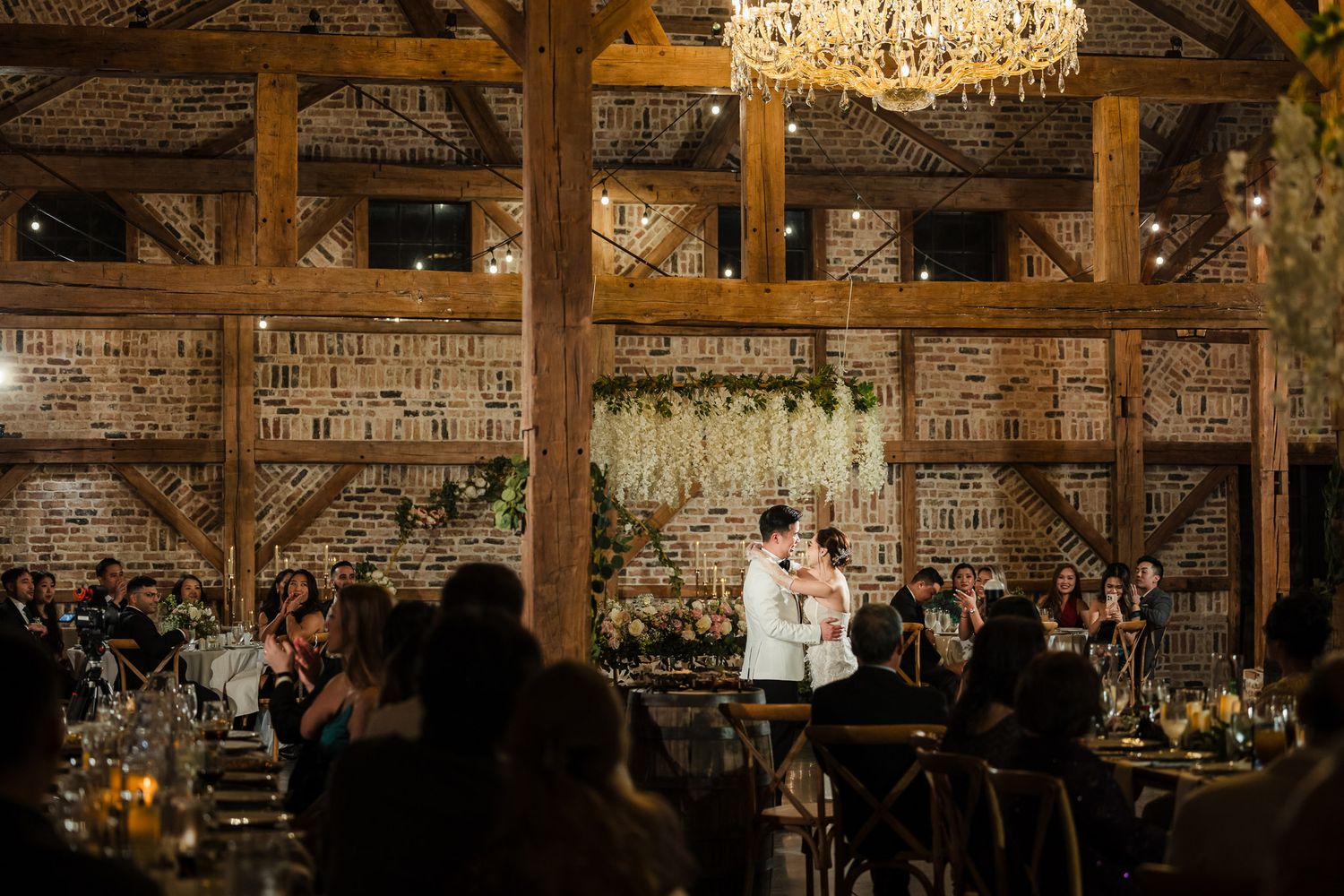
For the rest of the night: three light stands, placed in three corners of the room, plus flash on camera. All four gelled with CTO to match the
chandelier and the string lights.
Note the change from the ceremony. Same number of lights, different placement — corners rather than sides, firing across the floor rather than forward into the room.
A dance floor wants shape and separation, not the flat even coverage a ceremony needs.
Three stands rather than two, because of the size of the space. A room this large with this little reflectivity swallows light. Two sources leave dead
zones where guests disappear.
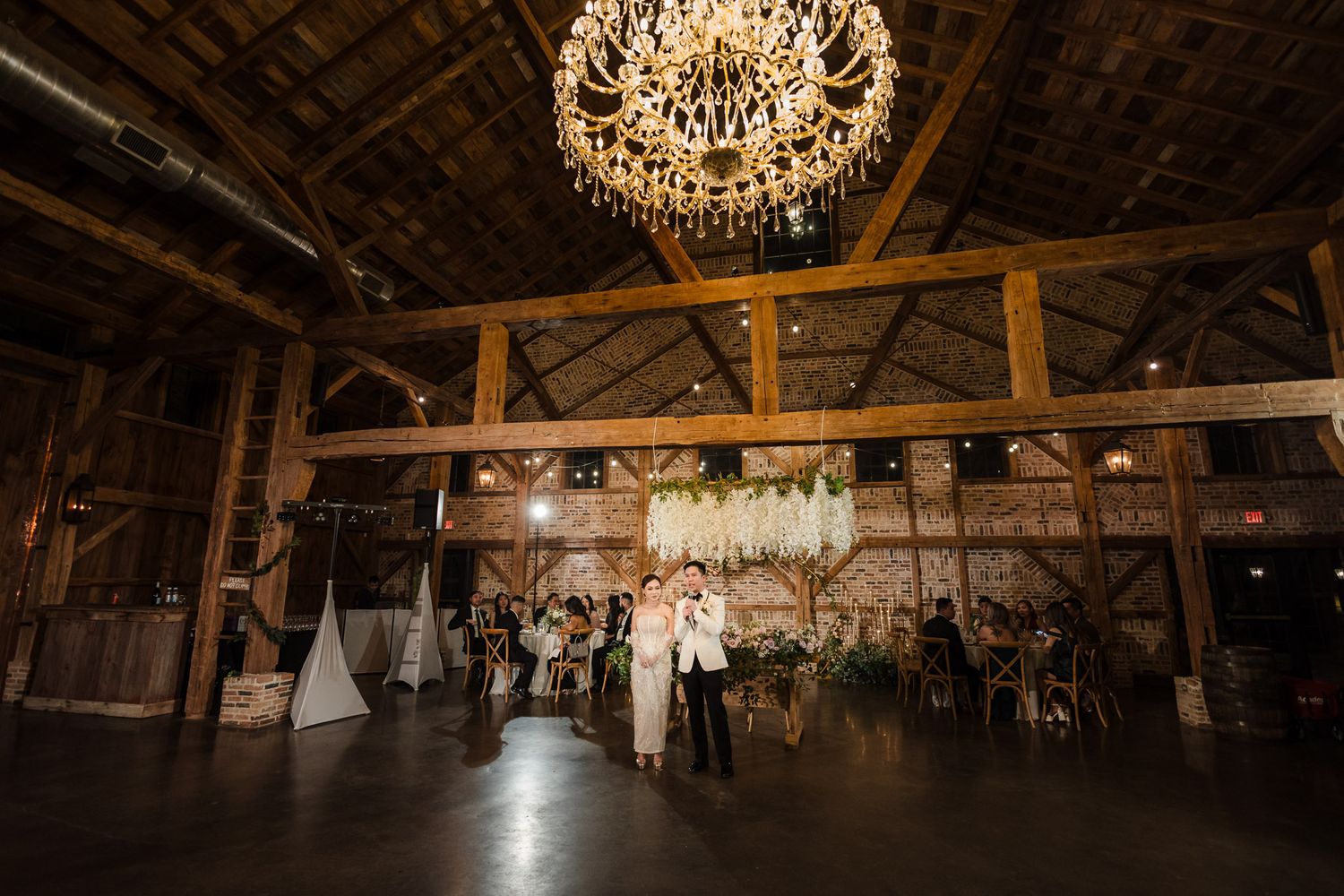
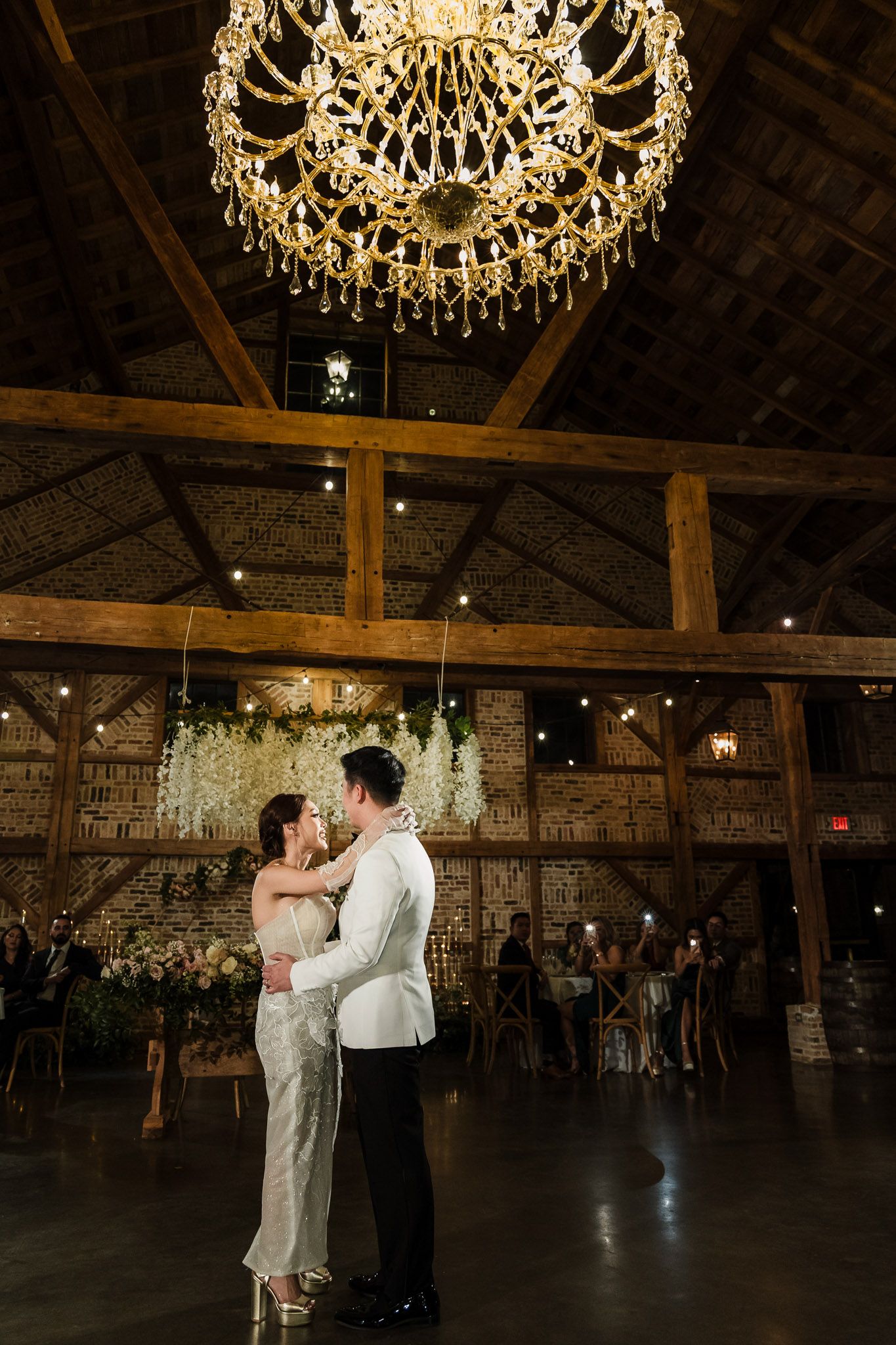
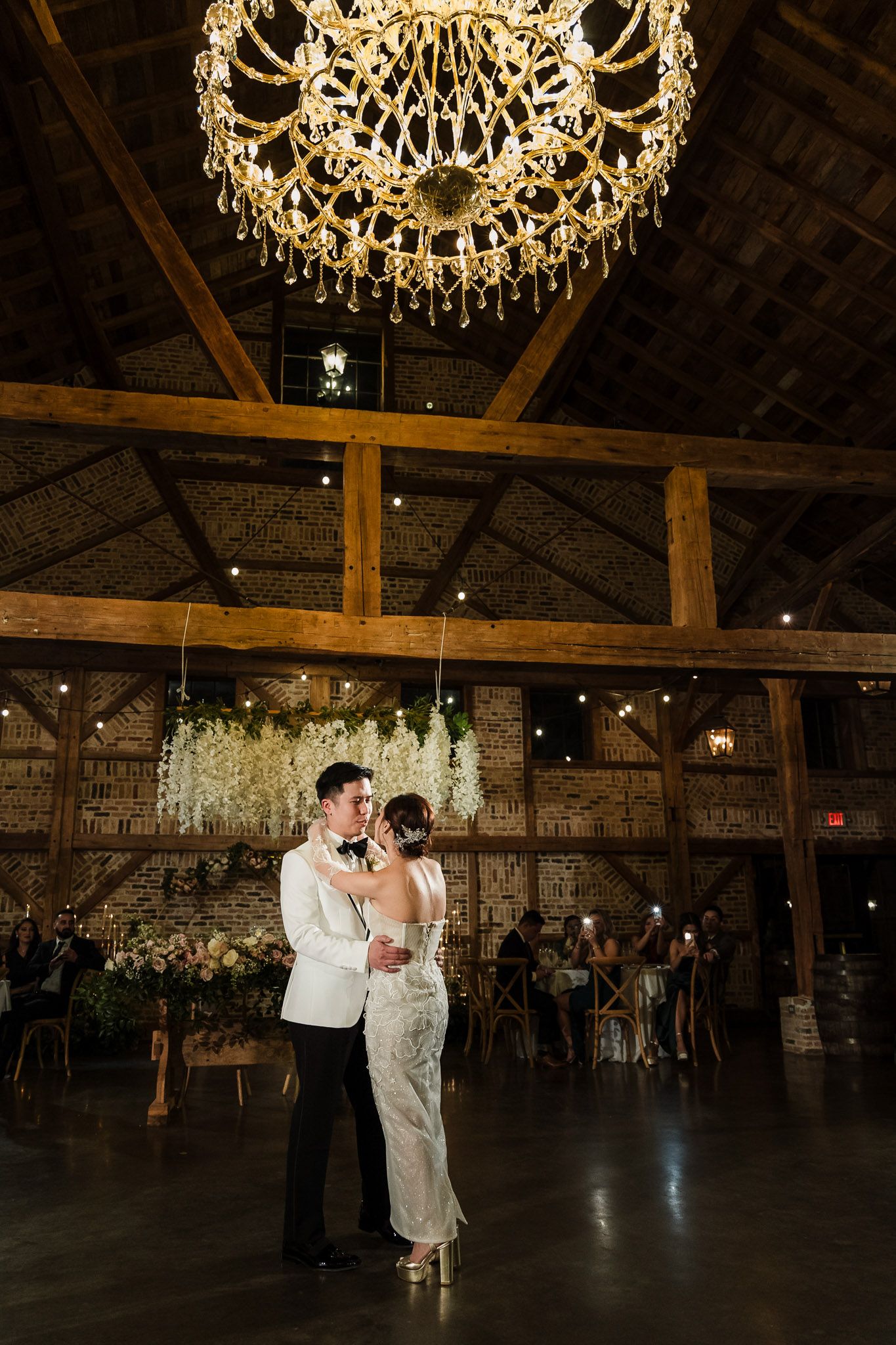
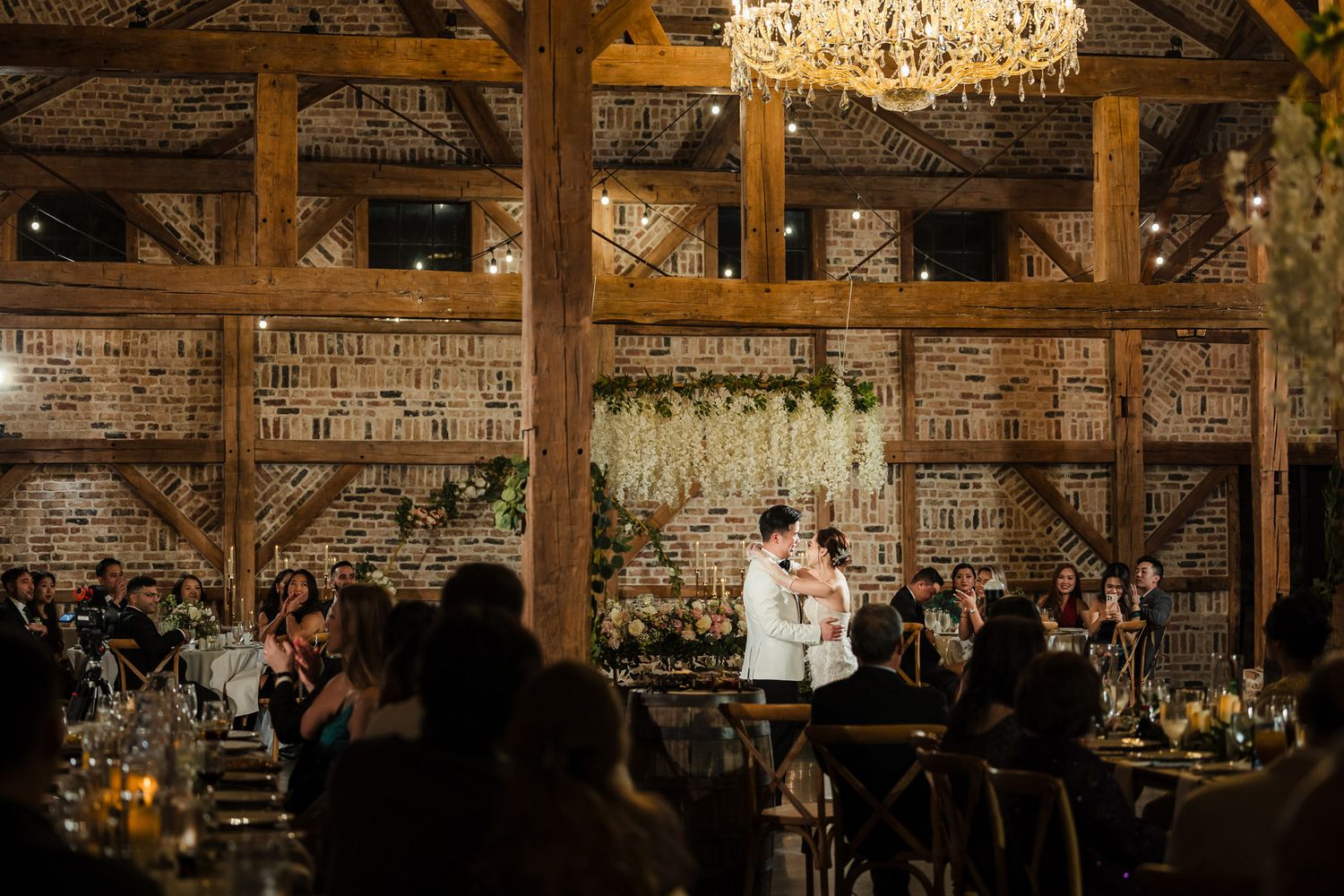
Two of our three stands are visible at the edges of that frame. We left them in. This is what lighting a room this size actually looks like.
And a bouquet only gets to travel that high in a barn with a ceiling like this one.
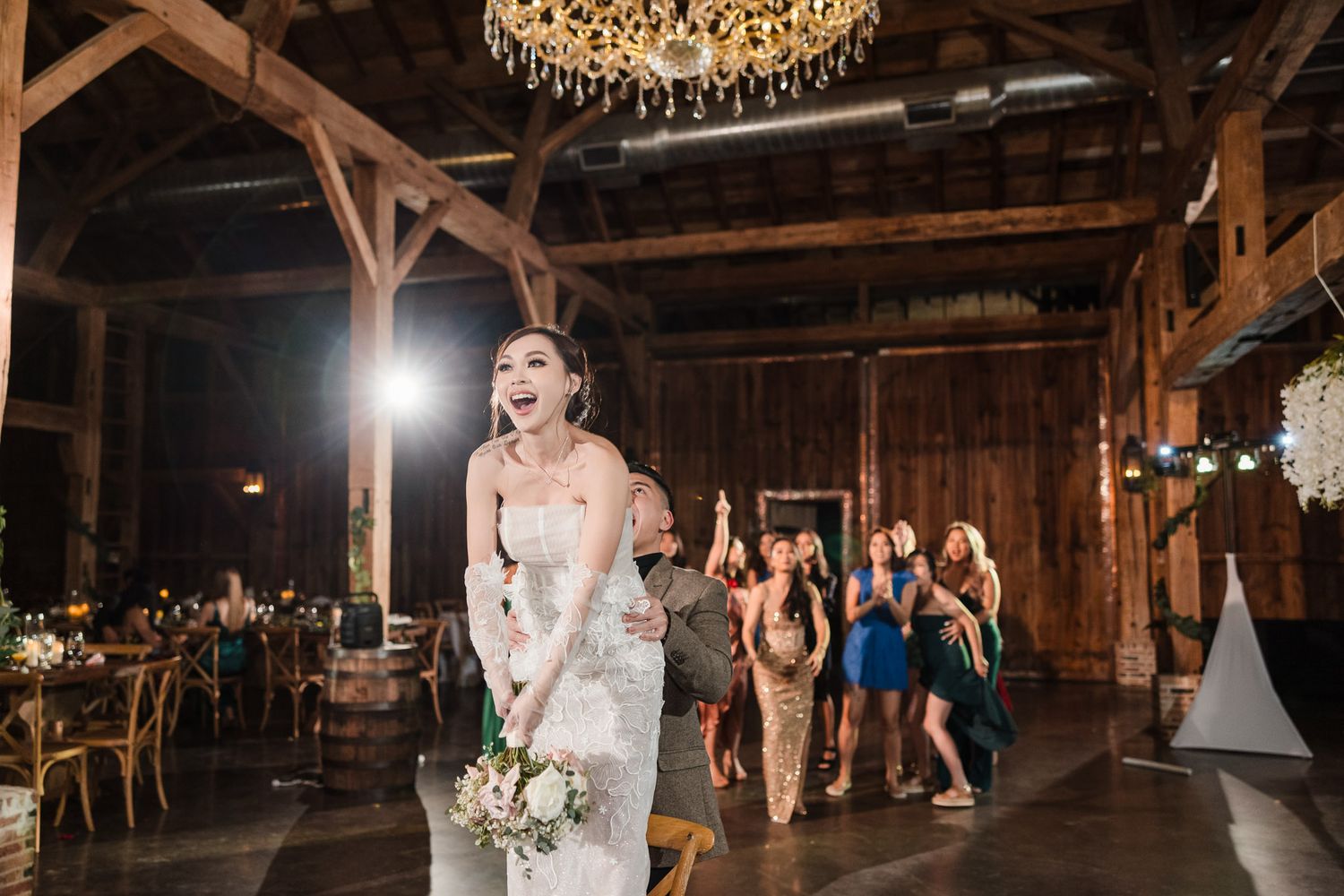
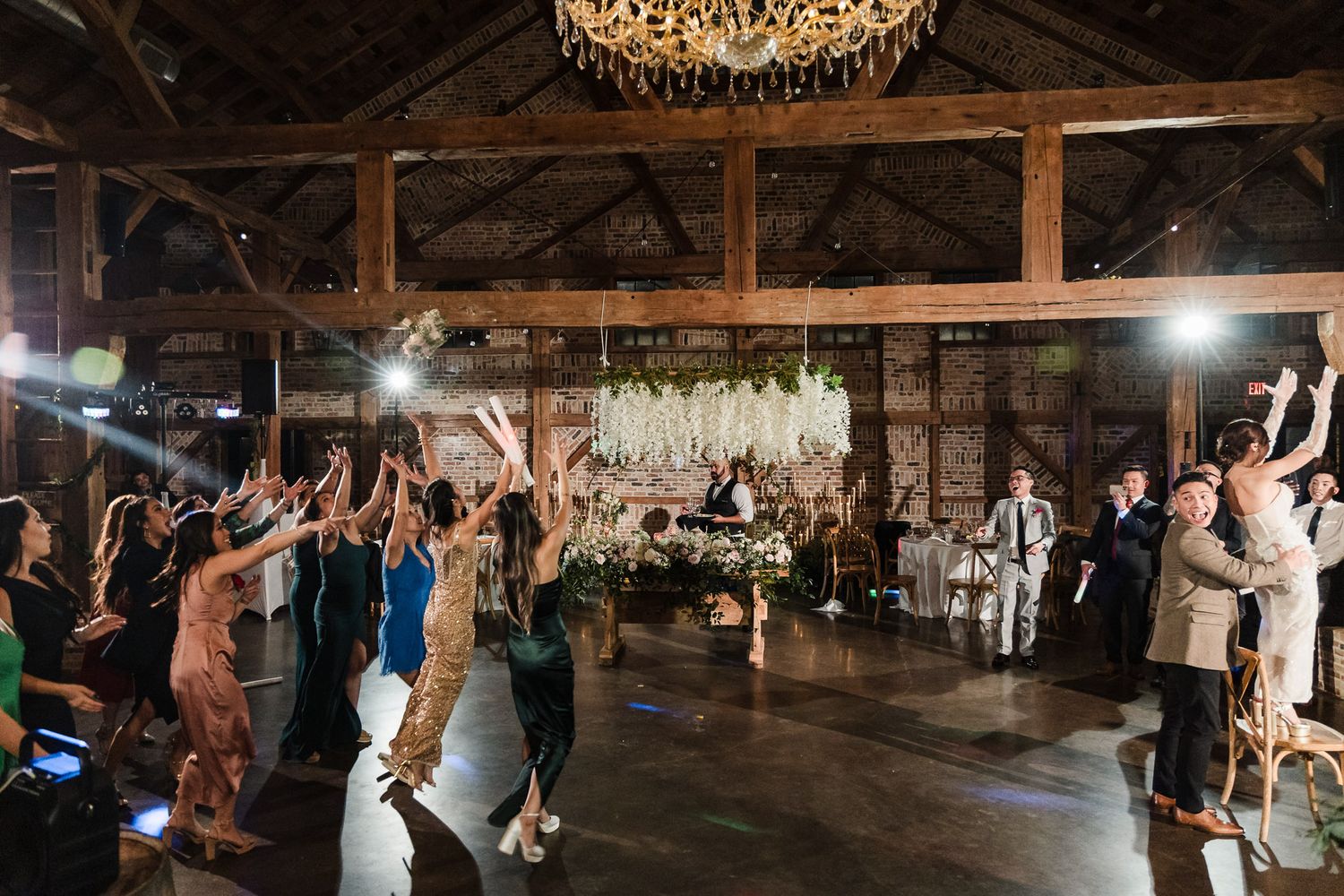
The gels are what keeps the room looking like itself. Blast it with bare white flash and the chandelier turns grey, the timber goes flat, and you have
destroyed the exact thing you came here to photograph.
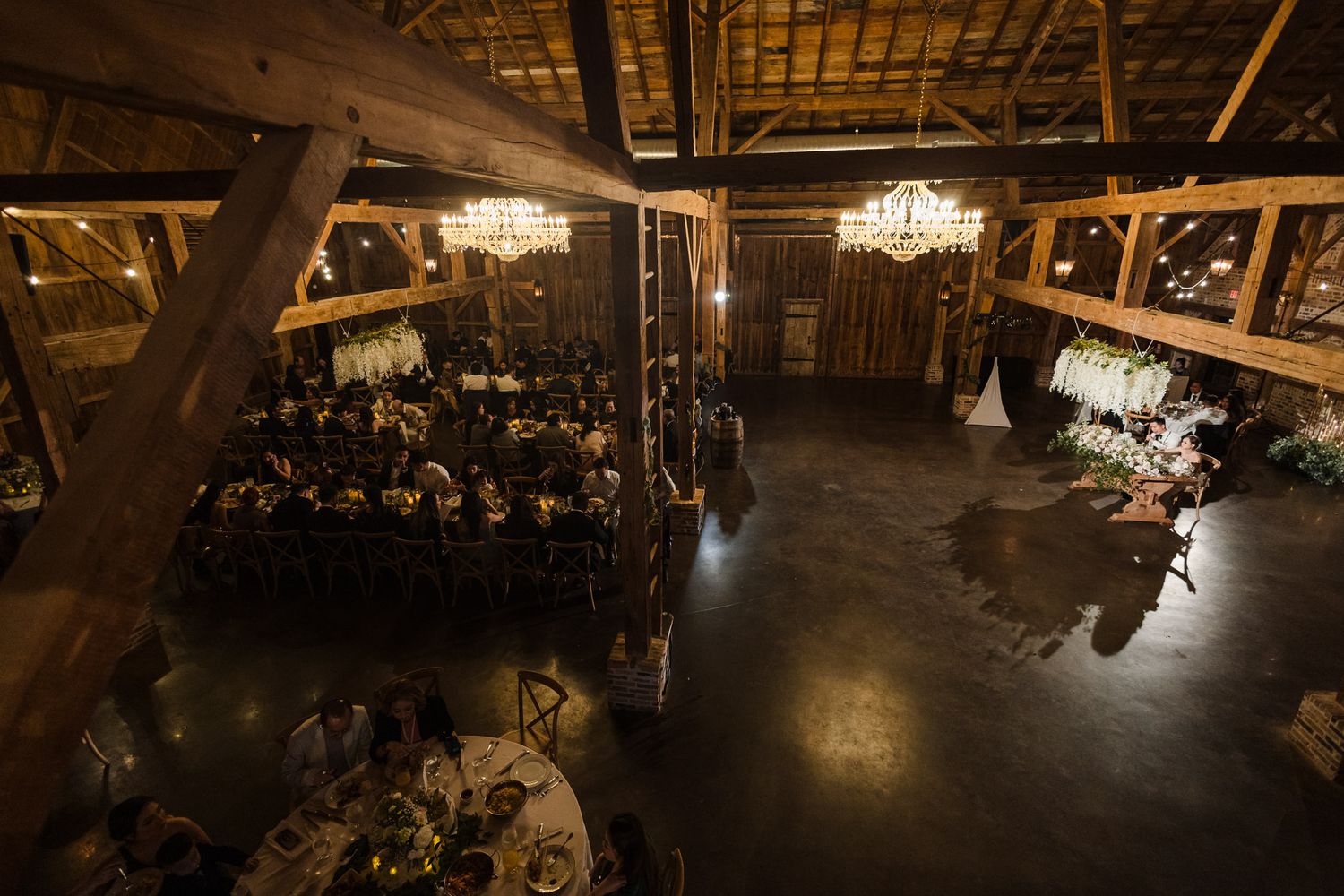
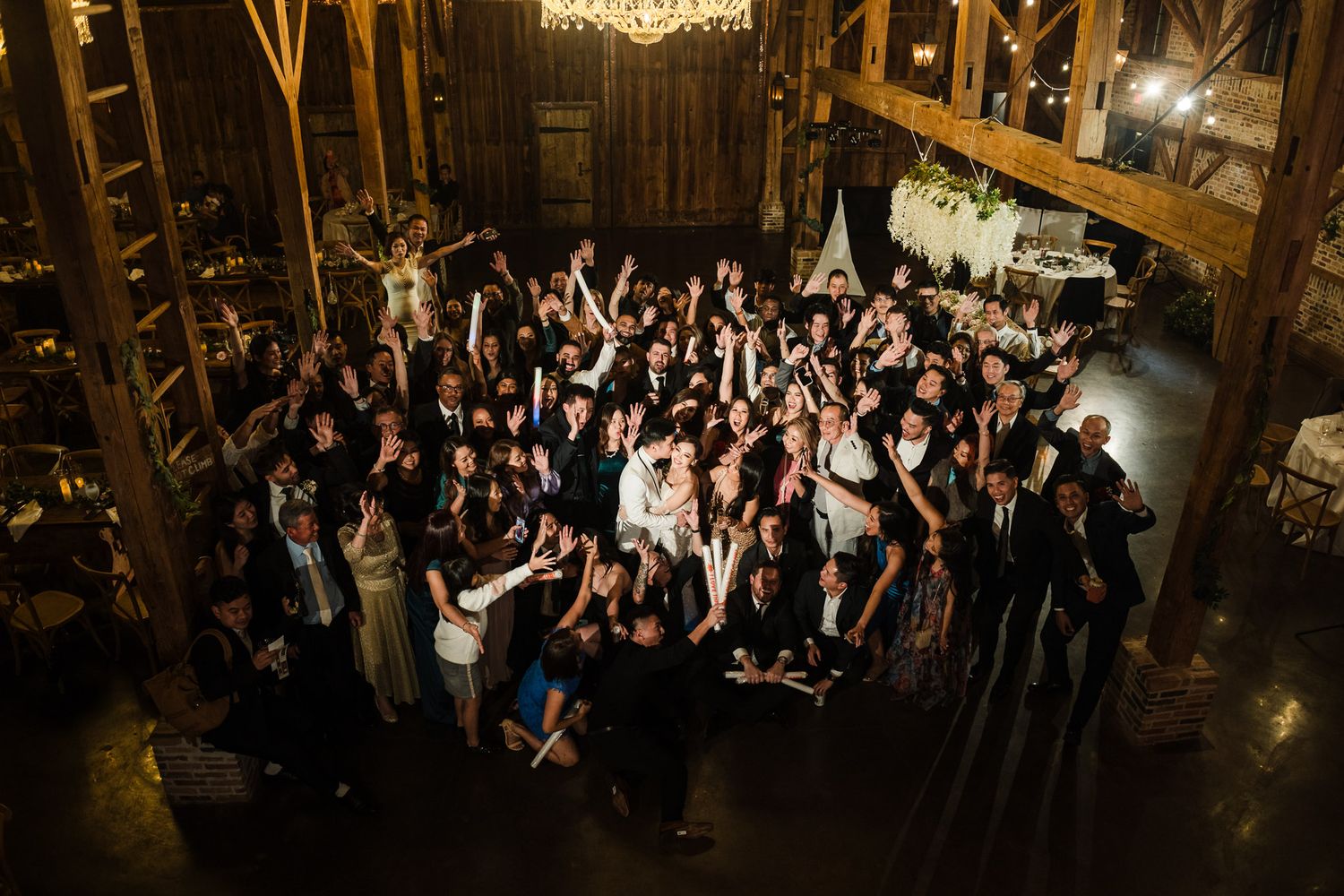
There is also a second level here, which opens up an angle very few venues offer — the entire barn and every guest in it, in one frame from above.
The Lion Dance
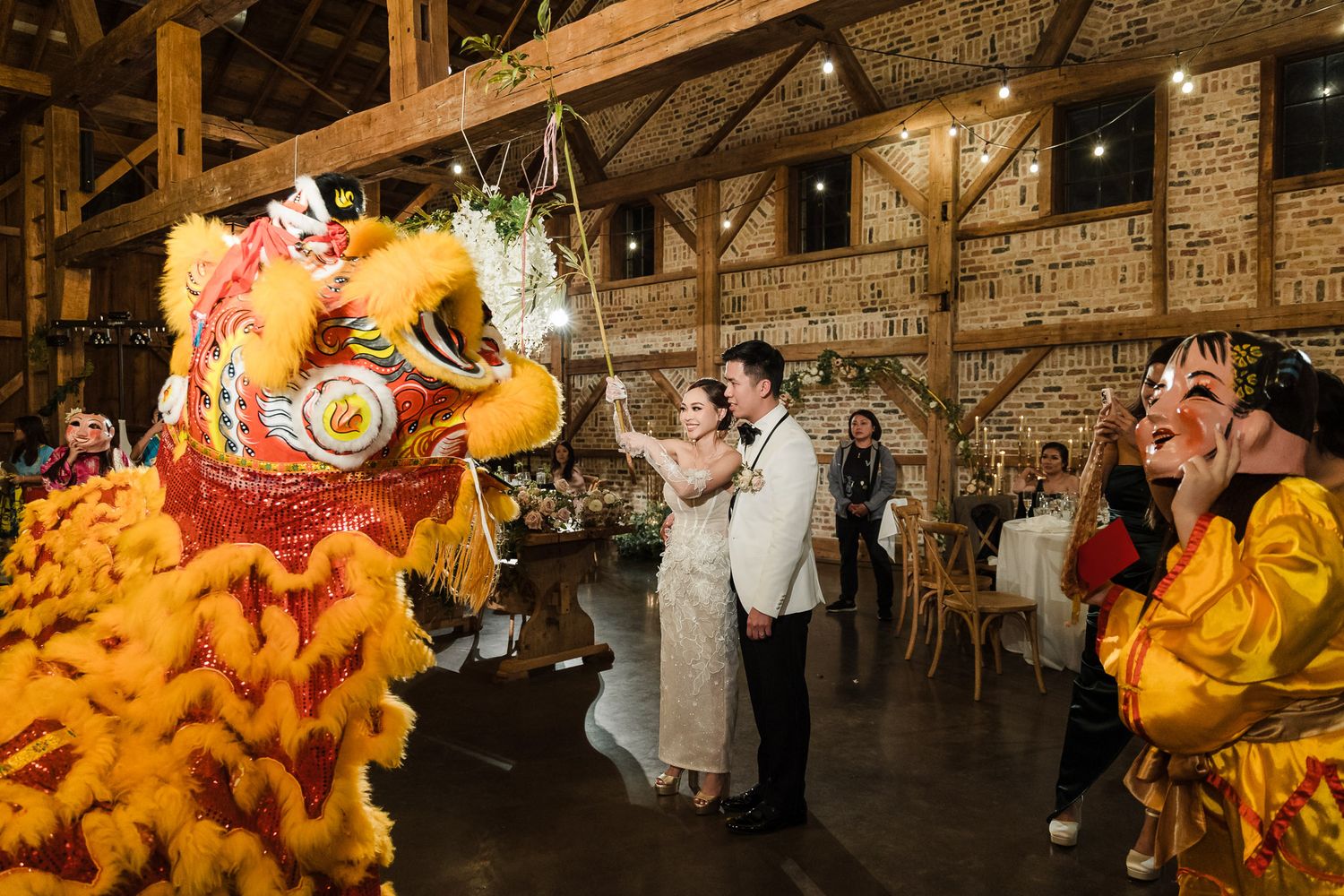
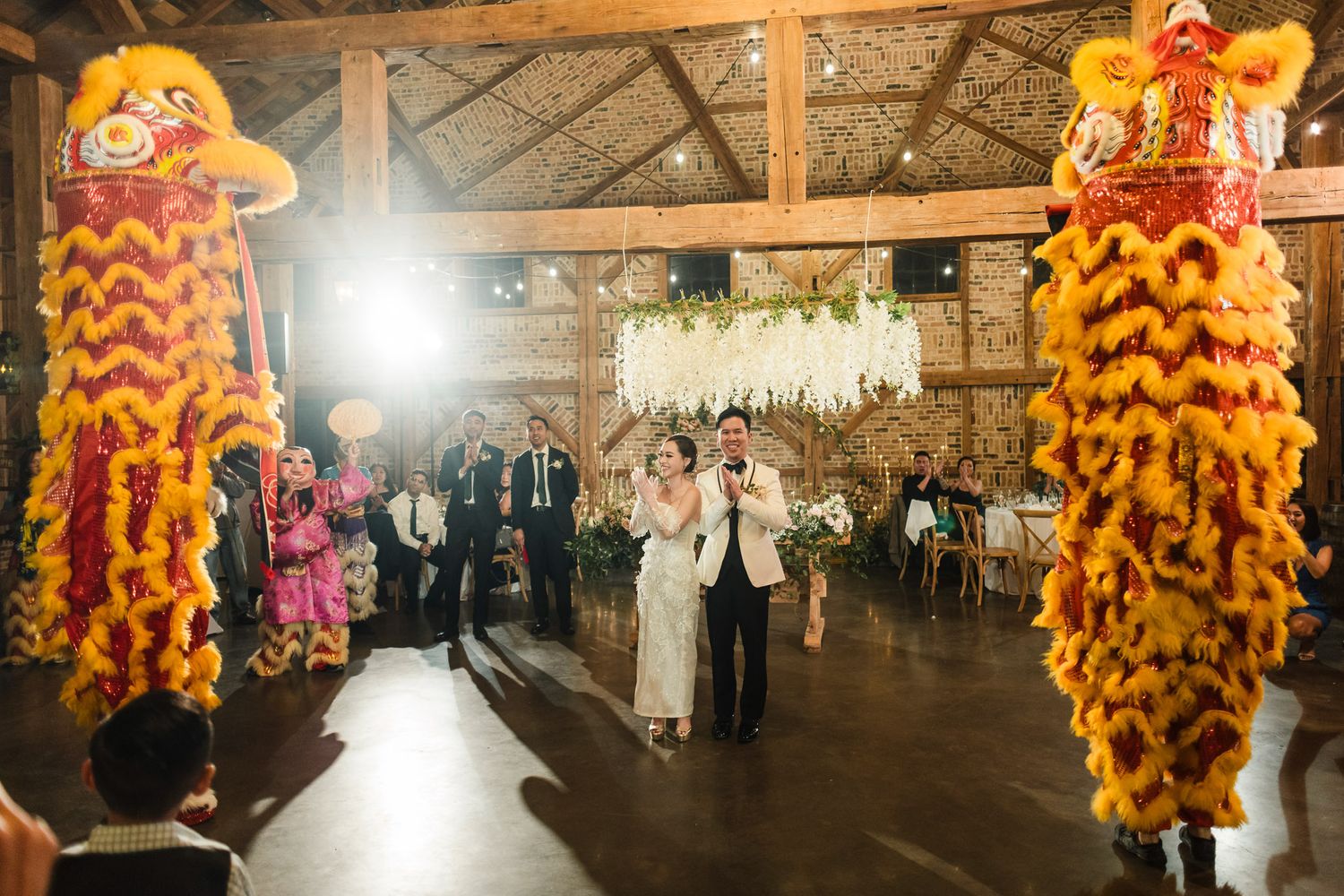
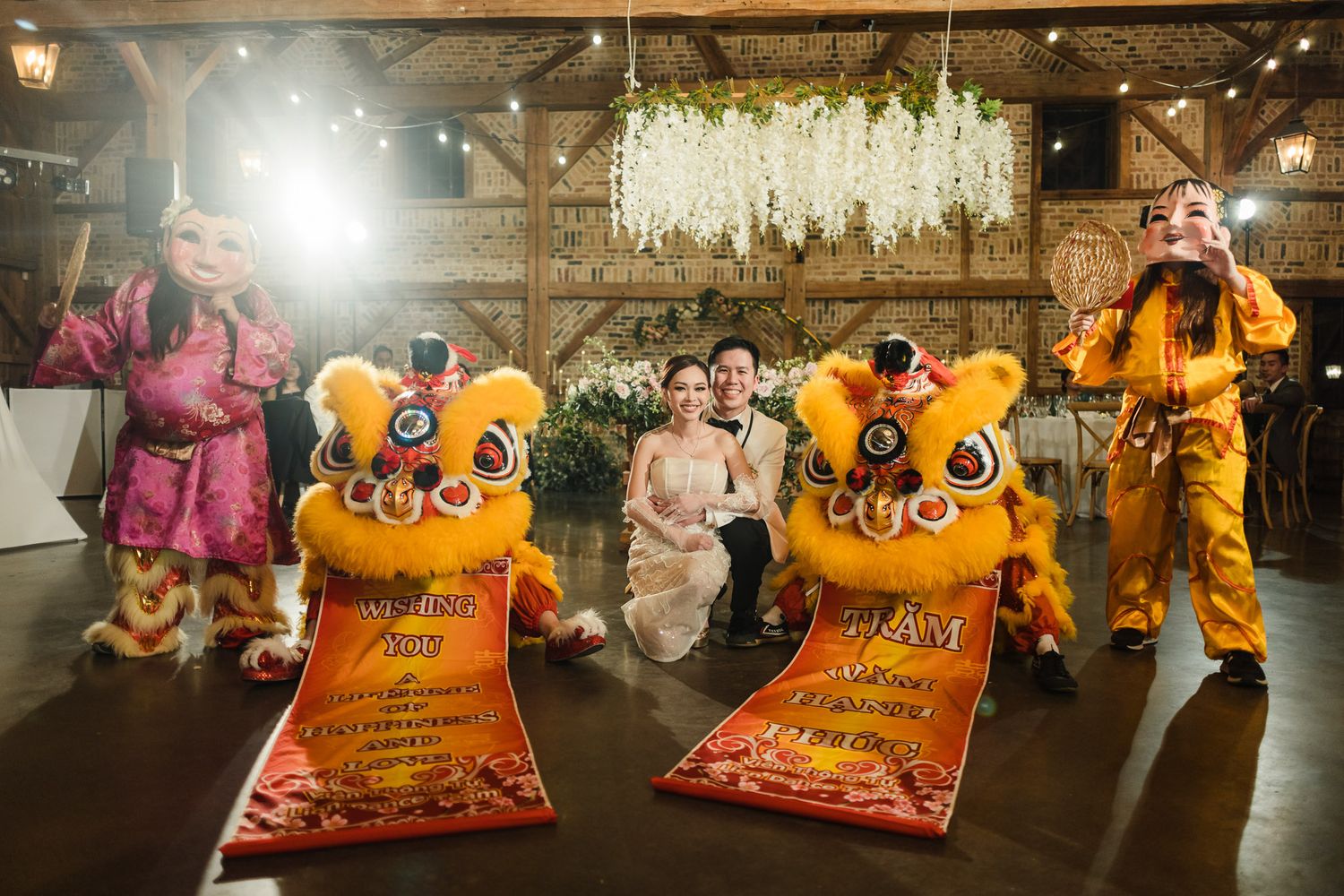
Two lions and two ông địa, in a Texas barn built in the 1860s.
Múa lân is loud, fast, and completely unpredictable. The lions move where they want. The masked figures work the crowd. It lasts a few minutes and
then it is over.
If your photographer has not shot it before, the usual outcome is a set of blurry yellow shapes. You need to know roughly what is coming, where the
lions will end up, and when the couple will be handed the greens — and you need your lights already in position, because there is no time to move a
stand once it starts.
Best Photo Spots at Beckendorff
1. The brick exterior wall Pale, textured, with gas lanterns, tall black-framed windows and a paved terrace. Works in any light, holds a full-length frame easily, and it is where first look belongs.
2. The open field Toward the old rust-roofed outbuilding and the fence line. This is the frame that says farm — nothing else at the venue looks like
it. Best in the last hour before sunset.
3. The hallway by the getting-ready suite Glass doors, real daylight, and the only usable window light indoors.
4. Under the chandelier The centrepiece of the barn. Needs lighting, always, but it produces the single most dramatic frame of the night.
5. The second level Not a portrait spot. Plan for it anyway — one frame from up there holds the whole reception.
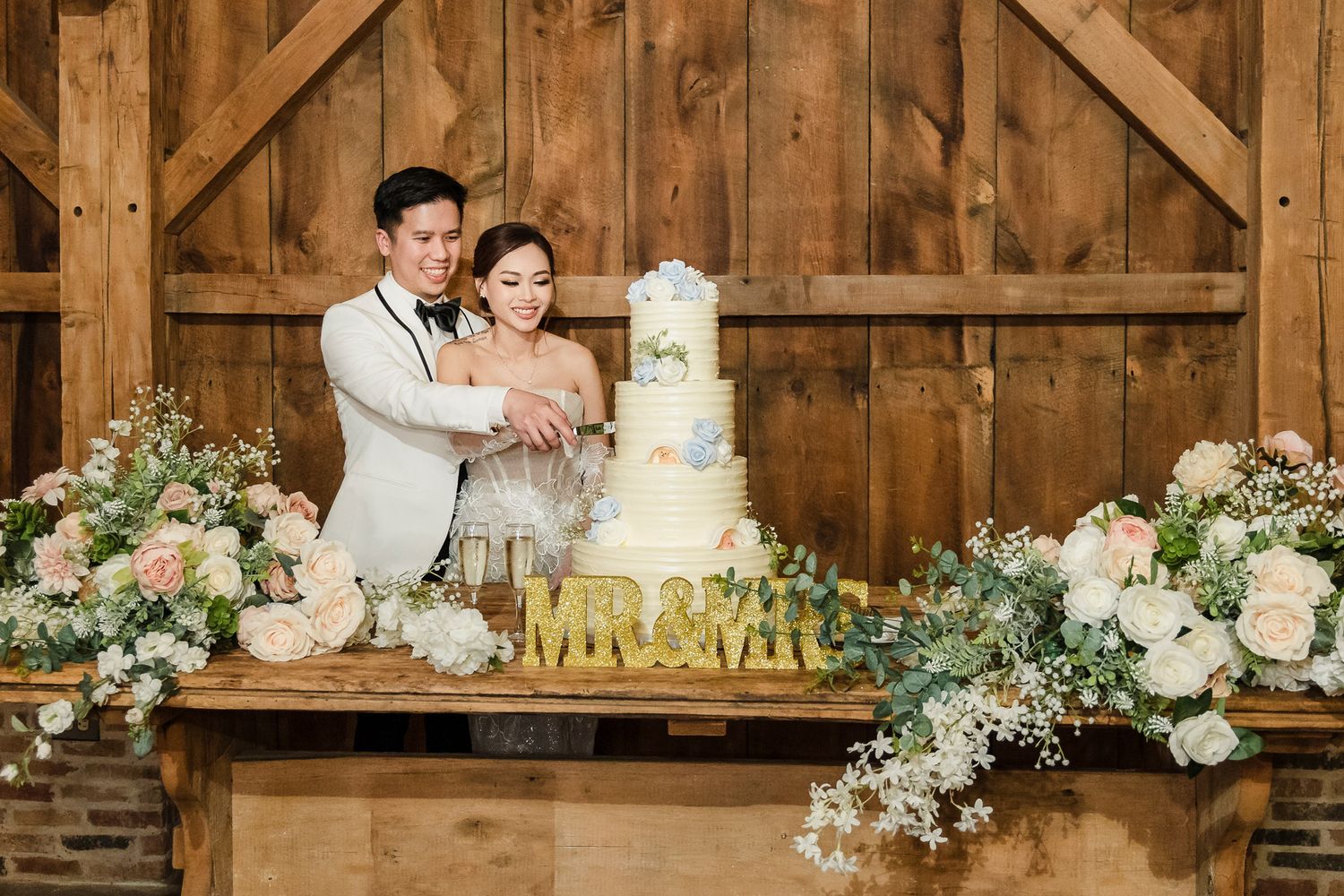
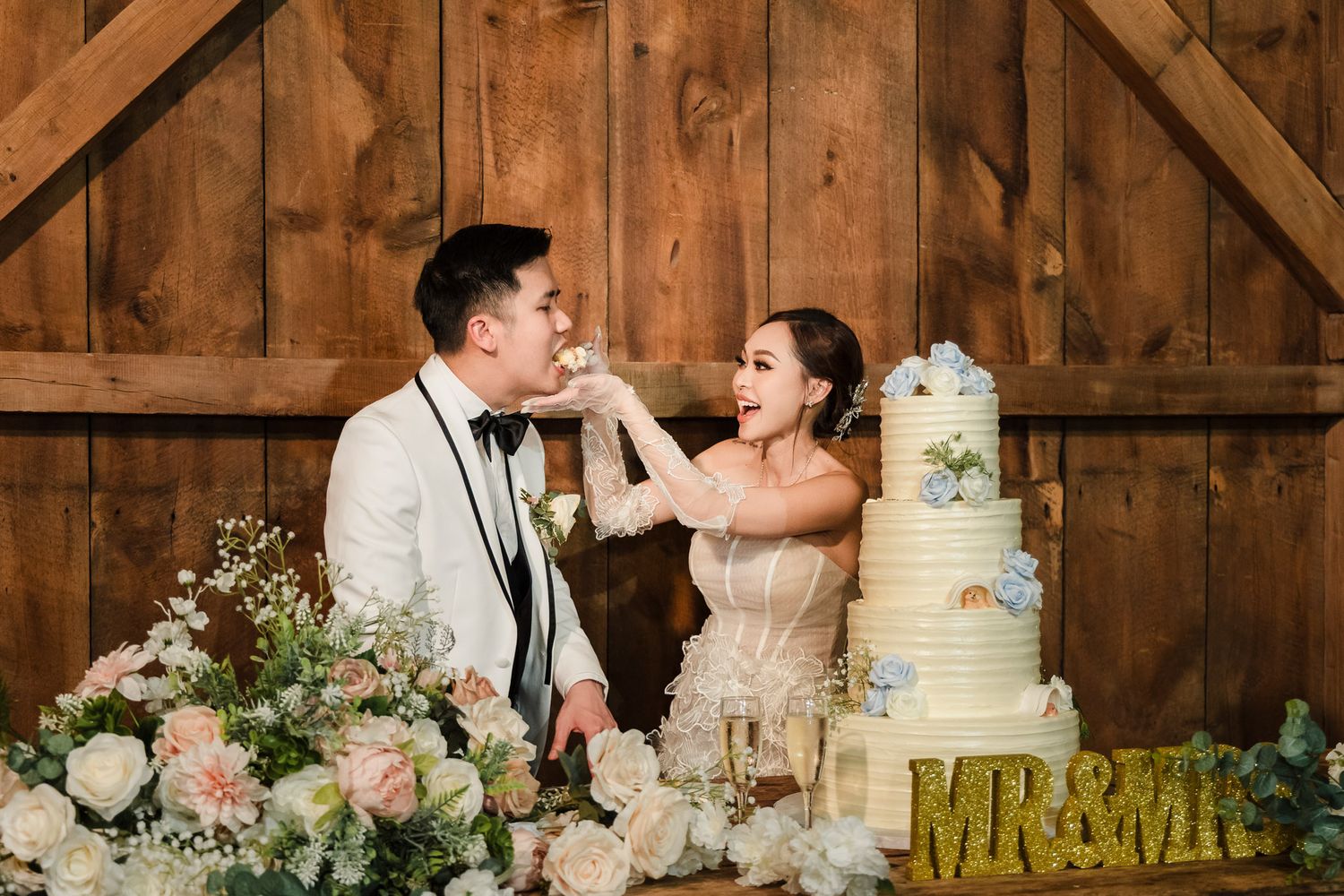
6. The barn wood wall Deep warm timber. Excellent behind the cake table or anywhere you want a rich, simple backdrop.
Timeline Advice
Our day ran: getting ready at 3, first look at 4, wedding party after, ceremony 5:15, reception 7, done at 10:30.
What worked: the 4 PM first look. Everything outdoors depended on it.
What we would change: we would have explored more of the property. There is more here than one wedding day covers, and we were working
against the clock after the ceremony.
Practical notes: - Everything is on one site. Moving between spaces takes about a minute — a real advantage over multi-location days.
- The venue provides day-of coordination. Use it. Ask them to protect your portrait window rather than filling it.
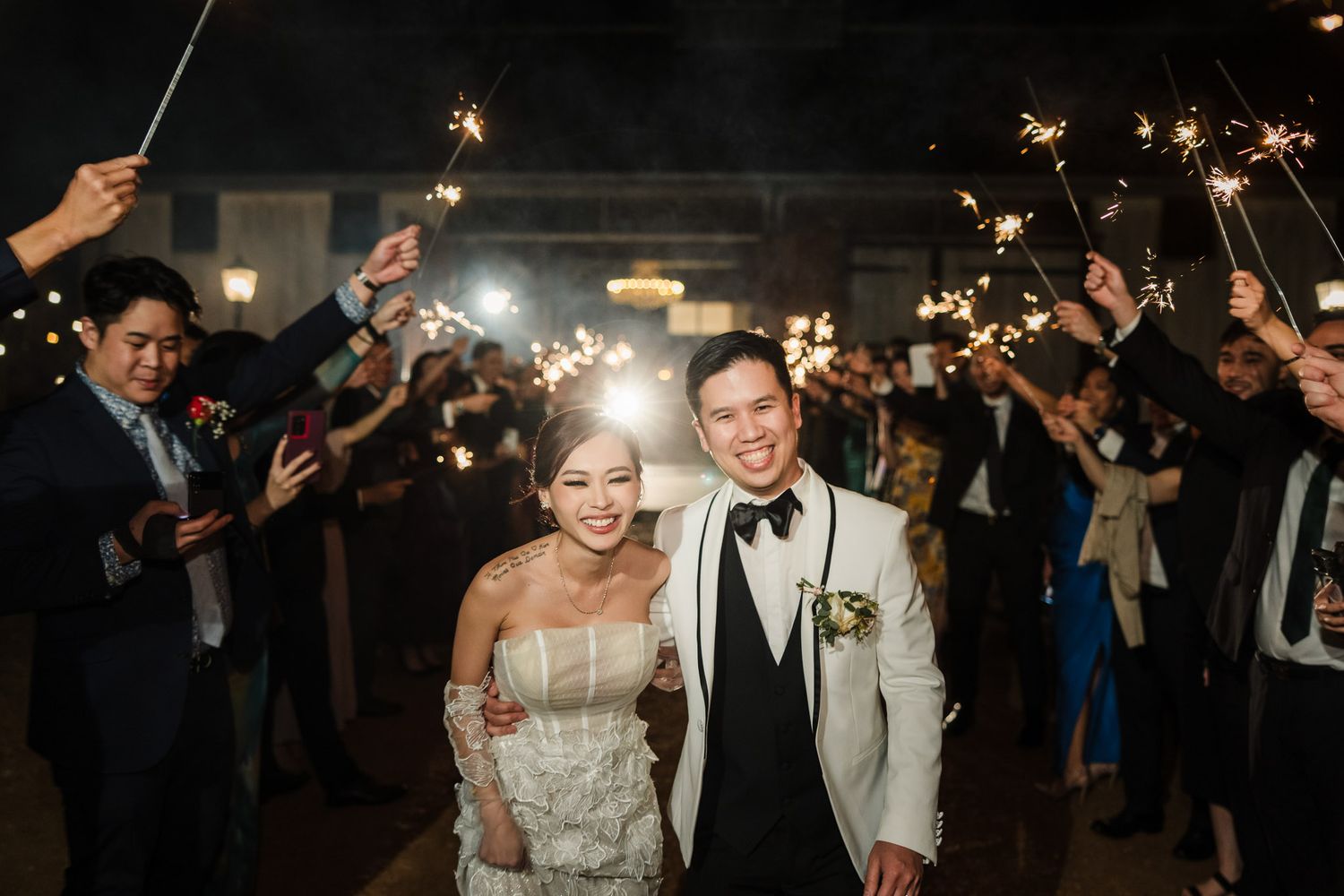
- Sparkler exit at the end is worth building in. The
barn lit from inside, sparklers, and a dark field behind is the last strong frame of the night.
Frequently Asked Questions
Have you photographed at Beckendorff Farms? Yes. Everything in this guide comes from a wedding we shot there, not from a brochure.
Do you bring your own lighting? Always — every wedding, every venue, with backups on site. At Beckendorff it is not optional. There is no surface in that barn that will do the job for you.
Our ceremony is at 5 PM in winter. Is that a problem? Not if you plan for it. It does mean your best outdoor light happens while you are
indoors, so a first look becomes the difference between having outdoor portraits and not having them. Tell us your ceremony time and we will build the day backward from the light.
We’re having a lion dance / a tea ceremony / something specific to our family. Do you know it? Ask us. We have photographed Vietnamese tea ceremonies at sunrise, lion dances in a Texas barn, and most things in between. If there is a moment that matters to your family, tell us — we will be standing in the right place before it happens.
How many photographers will be there? Two. Min and Annie shoot every wedding as a team.